
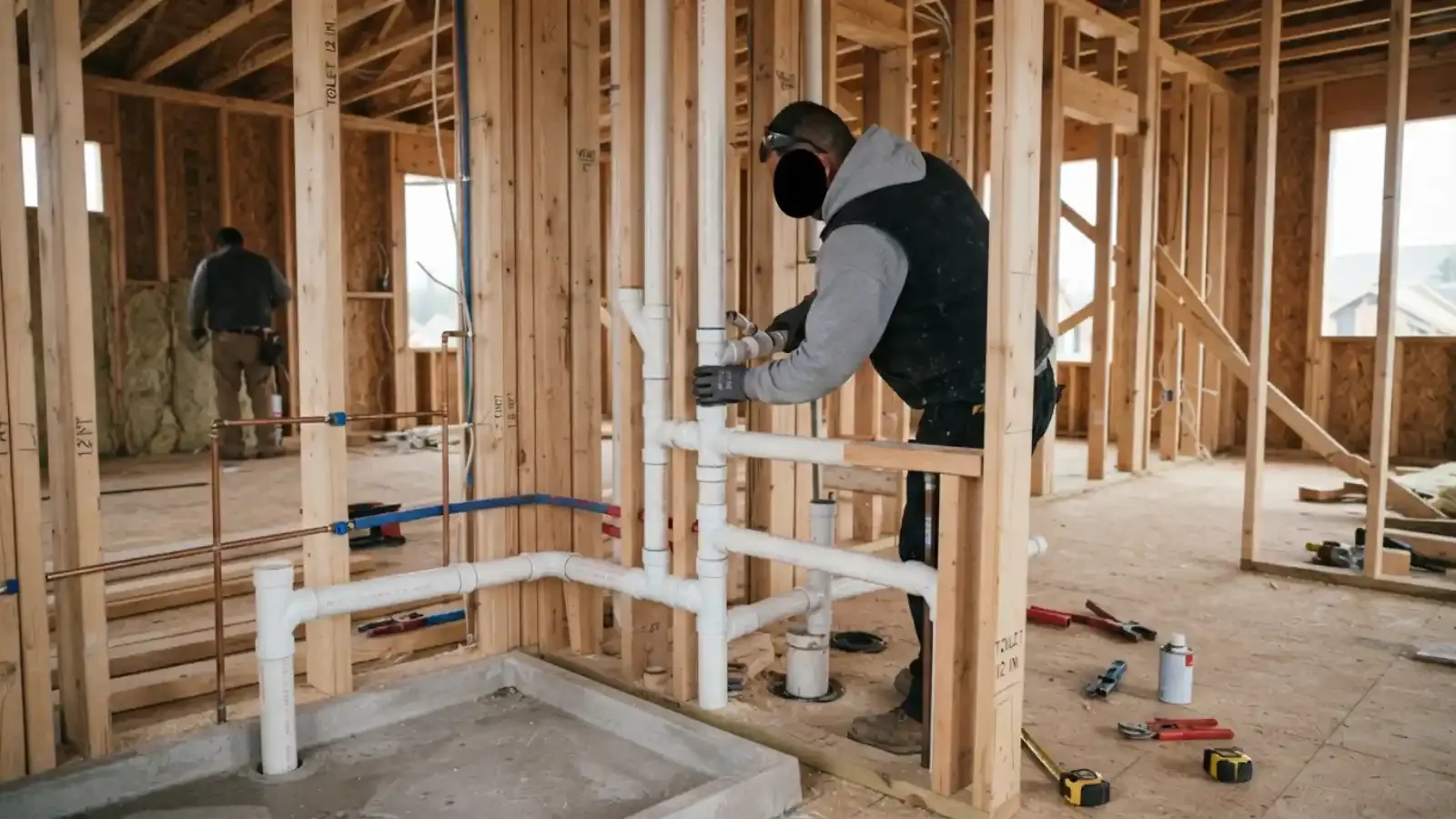
Fixtures a plumber installs and what each one needs
Sinks and faucets
Hot and cold supply with individual shutoffs, a drain with a trap, and a vent path to let the drain flow.
Toilets
A closet flange on the drain, a cold supply with a shutoff, and a sealed, level seat on the floor.
Tubs and showers
A mixing valve, a drain with a trap, an overflow on tubs, and wall or floor waterproofing that a tile setter finishes.
Dishwasher and washer hookups
Supply valves and drains that meet the appliance's requirements, installed before the appliance goes in.
Ice maker lines
A small supply tube with its own shutoff valve, run without kinks to the refrigerator.
Most of the work is hidden once a wall is closed. That is why the shutoff valves, supply lines and drain connections matter more than the fixture finish. A well-installed basic fixture outlasts a fancy one with weak connections.
Sink drains, traps and venting
A sink drain looks simple, but it has three jobs. It carries water away, holds a plug of water in the trap to block sewer gas from entering the room, and connects to a vent so the drain does not gurgle or siphon dry. A sink that gurgles or empties slowly after a new install is often a venting or slope problem, not a clog.
Replacing a kitchen sink often means changing the basket strainer, tailpiece, trap and any disposal connection. A double-bowl kitchen sink may share one trap, while a bathroom vanity usually needs a smaller drain. If a disposal is part of the plan, see the garbage disposal service page for related work.
Ready to book plumbing installation? Same-day appointments are offered when the schedule allows.
Call (770) 214-4545Toilets, tubs and showers
A new toilet sits on a flange attached to the floor and drain. The flange must be sound and at the right height, so a plumber checks it before setting the bowl. EPA's WaterSense label means a toilet uses 1.28 gallons per flush or less, which is about a fifth below the federal standard of 1.6 gallons per flush. For a household that flushes often, that adds up on the water bill.
Tubs and showers need a drain that matches the unit, a valve set at the right depth in the wall, and waterproofing around the pan or surround. A leak behind tile is expensive to find, which is why the valve and drain are pressure tested before the wall is finished. If an old toilet is only running or leaking, the toilet repair page is the cheaper first stop.
Dishwasher, washing machine and ice maker connections
Appliance hookups fail slowly, then all at once. A dishwasher needs a supply with a shutoff and a drain that is looped or fitted to prevent dirty water flowing back. A washing machine needs a recessed box or a pair of valves and a standpipe drain. An ice maker needs a thin supply line that stays clear of the back of the fridge.
Braided stainless supply hoses are common, though they should still be checked every few years. Ask the plumber to leave shutoff valves where you can reach them, because the day a hose fails you will want to close it in seconds.
Remodel rough-in and adding a bathroom
Rough-in is the stage where supply and drain pipes are set inside open walls and floors. The positions of the pipes decide where fixtures can sit, so a remodel plan and the plumbing plan should match before cabinets and tile are ordered. Moving a toilet or tub is usually harder than moving a sink, because drains need slope and a vent.
| Project | What changes in the plumbing | Question to ask |
|---|---|---|
| Swap a sink or faucet in place | New fixture on existing supply and drain | Are the shutoff valves and trap being replaced too? |
| Move a fixture in a remodel | New supply and drain routing, plus venting | Where will the pipe run, and what will be opened? |
| Add a bathroom | New supply, drain, vent and connection to the existing system | Is the drain close enough to a stack, and is a permit included? |
| Tub to shower conversion | New drain, valve and waterproofing | Who handles waterproofing and tile? |
| Add a laundry or utility sink | New supply and drain, often with a standpipe or trap | Will the drain handle the extra flow? |
Adding a bathroom on a slab means cutting into concrete to run drains. Homes with a crawlspace can route new lines underneath. Both options are possible, but they come with different costs and access limits.
New construction plumbing in brief
New construction plumbing follows stages. Pipes and drains go in before walls close, so inspection timing affects the build schedule. Ask Union City Community Development at (770) 515-7920 what your project needs.
PEX supply lines and what the pipe choice means
PEX is a flexible plastic pipe that bends around corners, so a new line often needs fewer fittings than rigid pipe. Connections use crimp, clamp, compression or expansion fittings, and each type needs the right tool. PEX should be kept out of direct sunlight, and one reference notes that about 30 days of exposure may cause failure, so exposed runs need protection.
If your project involves replacing the old supply system through the house, the repiping page covers that broader scope. For new fixtures and branches, PEX is one of several options the plumber may recommend.
Permits and who is allowed to install
Anyone installing plumbing in Georgia should hold a license from the Secretary of State's plumbing board. A Class I Master covers single-family homes, so check the class against your job. The city's permit page names the 2018 International Plumbing Code with Georgia amendments, and a permit goes to the certified contractor.
What a plumbing installation quote should include
- Each fixture by make and model, and who supplies it, you or the plumber.
- The shutoff valves, supply lines, traps and drain parts being replaced.
- Any wall, floor or concrete opening and who patches it.
- Whether the permit is included, and who pulls it.
- The testing before walls are closed.
- How leftover material and old fixtures are removed.
- The clear price before work starts.
What to do before install day
Clear the work area, find the main water shutoff, and tell the plumber about any gas appliance nearby. If you smell gas at any time, leave the house and call 911 from outside.
What changes the price of a plumbing installation
Fixture type and quality
A basic toilet and a wall-hung model or a freestanding tub need very different installation work.
Distance from existing pipes
Connecting near a stack or supply line costs less than running new pipe across a house.
Access and floor type
Slab floors, finished walls and second-story rooms add opening and repair work.
Venting and drain slope
A new drain must slope and be vented, which can set where a fixture fits.
Permits and inspection
Permit steps vary, and the contractor pulls them.
Installation work is a planned improvement, so insurance does not normally pay for it. If an old fixture failed and caused water damage, that damage may be covered as a sudden loss. Ask your insurer and keep photos.
Every quote shows a clear price before work starts, and same-day appointments are offered when available. Want your real number? Call (770) 214-4545.
Common questions about plumbing installation in Union City
Sinks, faucets, toilets, tubs and showers, dishwasher and washer hookups, ice maker lines, and the supply and drain work behind them. Remodel rough-in and bathroom additions are also covered.
Often yes. The plumber should check that it is the right size, has the right connections and is in good condition. A missing part or a damaged fixture can delay the job.
Usually, because the city's permit page lists construction, alteration and repair. The contractor pulls it. Details change with the scope, so call Community Development at (770) 515-7920 first.
Search the plumber's name in the state licensee search and confirm the class fits your job. Single-family homes fall under the Class I Master scope.
Yes in many cases, but it usually means cutting the slab to run drains, so the distance to the existing stack matters. A plumber can inspect the layout and explain the options.
It should list the fixtures, the valves and drains replaced, wall or floor openings, patching, permit and testing. A clear price comes before work starts.
Installation is scheduled work. If a fixture has failed and is leaking, call the 24/7 line and the leak comes first.
Plumbing Installation across Union City and nearby towns
Installations are scheduled in Union City and nearby towns, including Fairburn, Palmetto, South Fulton, College Park and Riverdale.
Questions about plumbing installation? Call the line and describe what you see.
Call (770) 214-4545