
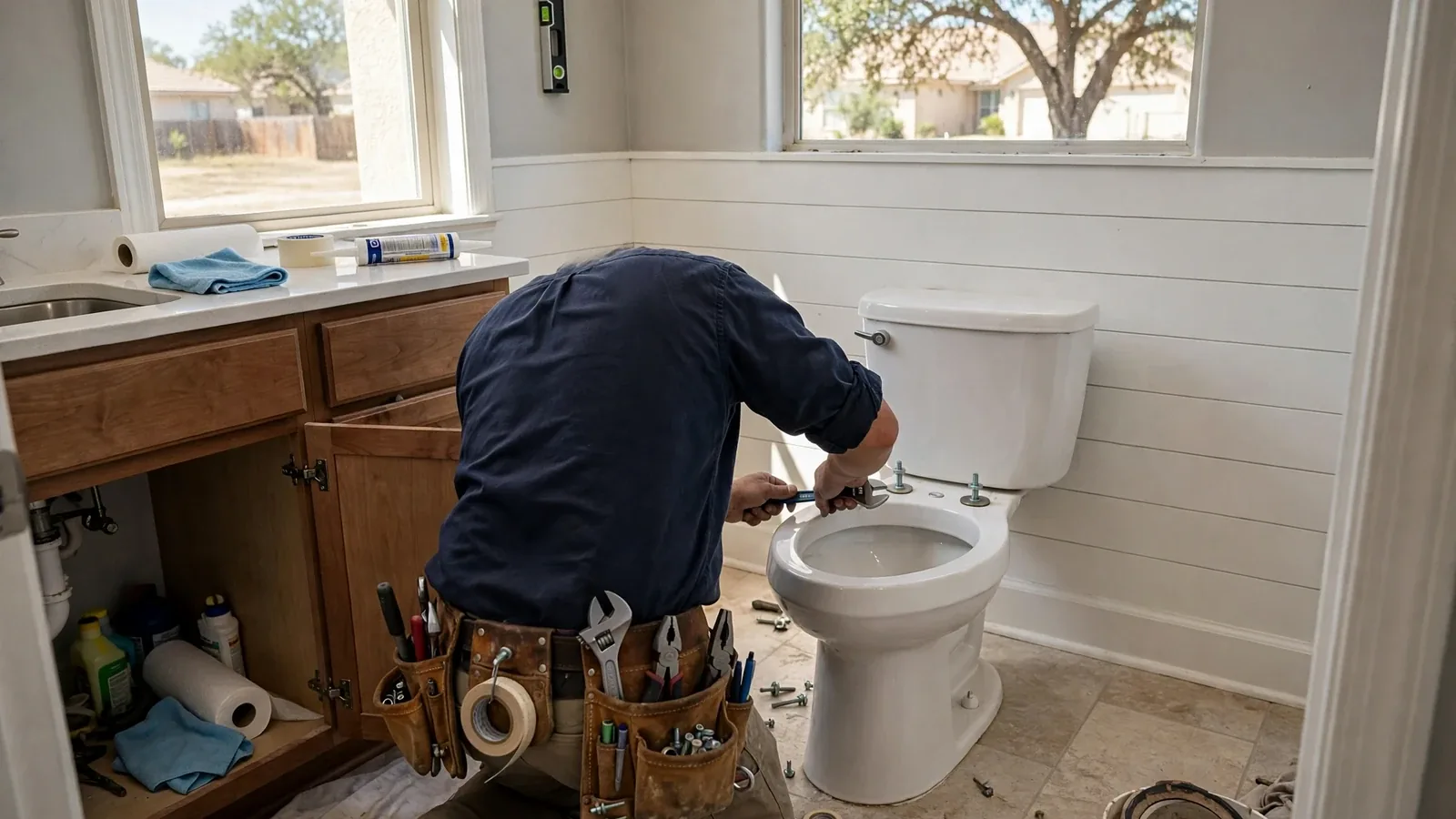
What people try that makes a toilet problem worse
Flushing again
A bowl that is rising is not draining. Every extra flush pushes more water over the rim and onto the floor.
Overtightening closet bolts
Porcelain cracks under uneven force. A rocking toilet needs the cause fixed, and a cracked base means a new toilet.
Pouring in drain chemicals
Caustic cleaner that does not clear a clog sits in the bowl and can splash a plumber or a child. It can also damage old fittings.
Using a coat hanger or a wrench handle
Wire scratches the porcelain trap. A plumber uses a closet auger designed for the curve.
Caulking a leaking base
Sealant hides the leak and traps water under the toilet, where it rots the subfloor. A base that leaks has a failed seal.
Each of these feels sensible in the moment. They fail because the symptom is not the problem. A plumber finds out which part is failing first, and then makes one targeted fix.
When a toilet problem is an emergency
Call right away when the bowl is overflowing, water keeps pouring from the tank, sewage-colored water appears, or more than one drain in the house is backing up. A running toilet or a slow base seep is less urgent but still wastes water. The EPA says household leaks can waste 180 gallons per week.
- Take the tank lid off only if you must, and lift the float arm to stop the fill.
- Turn the oval or round supply valve on the wall behind the toilet clockwise until it stops.
- If the valve spins freely or leaks, close the main shutoff where water enters the house.
- Lay towels around the base, and keep children and pets away from the floor water.
- Do not flush again. Call (770) 214-4545 and describe whether the water is clear or dirty.
Clear tank water on the floor is a repair job. Dirty or dark water, especially from a tub or floor drain near the toilet, can mean a clog in the main line. In that case, the fix may be drain cleaning rather than anything inside the toilet.
Need toilet repair help right now? Dispatch is open 24/7 and the price is explained before work starts.
Call the 24/7 line (770) 214-4545Clogged or failed seal, how to tell which one you have
| What you see | Likely cause | Typical fix |
|---|---|---|
| Bowl fills high and drains slowly | Clog in the toilet trap or just beyond | Plunger or closet auger |
| Water around the base after a flush | Failed wax ring or loose flange | Pull the toilet and reseat it |
| Tank water puddles at the back or floor | Tank-to-bowl gasket or supply connection | Replace gasket or supply line |
| Toilet rocks side to side | Loose bolts or a broken flange | Reset on a repaired flange |
| Water level drops, then refills by itself | Leaking flapper | Replace the flapper |
The test is simple. If water appears only when you flush, suspect the seal at the floor. If water appears constantly, suspect the tank parts or the supply connection. A moisture meter and a flashlight tell a plumber far more than the puddle alone.
Running toilet and the leak you cannot see
A toilet that runs, hisses, or refills on its own is leaking water from the tank into the bowl. The EPA says most toilet leaks come from old or worn flappers. It also says a worn flapper can silently leak thousands of gallons a year and should be replaced at least every five years.
The EPA's dye test is easy to run. Put a few drops of food coloring in the tank and wait about 10 minutes without flushing. If color appears in the bowl, the flapper is leaking, so flush right away to avoid staining.
A fill valve that sticks open can also run water down the overflow tube. A plumber adjusts the float, checks the water level against the mark on the tube, and replaces the fill valve when it will not shut off cleanly.
Wax ring, flange, and the leak at the base
The wax ring is a gasket between the toilet outlet and the floor flange. It seals the drain and keeps sewer gas out. When it fails, water seeps out at the base, the toilet smells, or the floor goes soft.
The flange is the ring bolted to the subfloor. If it is cracked, rusted, or set too low, the new seal cannot hold. Plumbers repair it with a flange ring or extender, and they check the subfloor for rot before setting the toilet back.
This is why caulk is a poor fix. Water that finds the way under the toilet will keep going, and a soft floor can hide for months. A leak at the base of a toilet on a second floor can also show up as a stain on the ceiling below.
Fill valve and supply valve
The supply valve, also called the angle stop, is the little shutoff on the wall. If it is stuck, corroded, or drips at the handle, it needs replacing, because you need a working shutoff for every repair. A braided supply line should be checked at the same time.
Old stops that have not moved in years often fail when turned. If one breaks, close the main and call a plumber. For a seized stop, a replacement takes minutes and prevents the next flood.
Repair or replace, and what WaterSense changes
Replace the toilet when the porcelain is cracked, when the flush is weak after cleaning the rim jets, or when the bowl keeps clogging. A tank with a long crack is not repairable. Parts repairs are the better choice when the toilet is sound and only the flapper, fill valve, or seal has failed.
WaterSense labeled toilets use 1.28 gallons per flush or less, which the EPA says is 20 percent less than the 1.6 gallon federal standard. The EPA estimates that replacing an old toilet can cut toilet water use by 20 to 60 percent. Look for the WaterSense label on the box before buying.
If you want to move a toilet or add a bathroom, that is new-fixture work covered by plumbing installation.
Rental notes for Union City
Census QuickFacts shows most Union City households rent, so many toilet floods start with a tenant. Shut off the supply valve, photograph the leak, and notify the property manager in writing the same day. Landlords often respond faster when they have a plumber's written diagnosis.
Check your lease before attempting a wax ring change yourself. A bad reseat can leak into the unit below, so it is wise to have a licensed plumber do it with the owner's approval.
While you wait
- Keep the lid down and the area dry, using towels or a wet vac if you have one.
- Wear gloves if the water is dirty, and wash hands afterward.
- Use another bathroom, or hold off using water until the issue is diagnosed.
- Avoid chemicals in the bowl, because a plumber may need to snake it.
- Check the ceiling below for stains if the toilet is on an upper floor.
What to do when a toilet overflows
Close the stop valve behind the bowl, lift the tank lid and press the flapper down, and skip chemical openers. Treat the water as contaminated, wear gloves, and keep children and pets out of the room.
What changes the price of a toilet repair
Which part is failing
A flapper or fill valve is a quick, small repair. A wax ring and flange repair means pulling the toilet and takes longer.
Floor and flange condition
Soft subfloor or a broken flange adds repair steps before the toilet can be set again.
Clog depth
A clog in the toilet trap clears with a closet auger. One that reaches the main line needs a different tool and approach.
Replacement versus repair
A new toilet changes the job from parts to fixture, supply, and haul-away of the old unit.
Time of day
After-hours calls use after-hours rates. The clear price is given before work starts.
A sudden toilet overflow or a supply line that bursts is often covered as sudden and accidental water damage. A seep that went on for months is often treated as maintenance, and coverage may be limited. Ask your insurer, and keep photos.
The cost depends on which part failed and what is under the toilet. Want your real number? Call (770) 214-4545.
Common questions about toilet repair in Union City
Yes. The 24/7 line is open, and same-day appointments are available when the schedule allows. If water is spreading, close the supply valve behind the toilet first.
Lift the float arm in the tank and turn the supply valve clockwise. If the valve fails, close the main shutoff and do not flush again.
Water at the base after a flush, a rocking toilet, a smell of sewer gas, or a soft floor all point to the wax ring or flange.
Most running toilets have a worn flapper or a fill valve that does not shut off. The EPA says flappers should be replaced at least every five years.
The EPA says WaterSense toilets use 1.28 gallons per flush or less. If your toilet is cracked or clogs often, replacement makes sense.
Shut off the supply valve, document the leak with photos, and notify the property manager in writing. Ask for a written approval so a plumber can start.
Yes. A tank leak into the bowl is silent. Put food coloring in the tank and see if it appears in the bowl within about 10 minutes.
Toilet Repair across Union City and nearby towns
Toilet repair visits cover Union City, College Park, Fairburn, South Fulton, Palmetto, and Riverdale.
Questions about toilet repair? Call the line and describe what you see.
Call (770) 214-4545