
The first 10 to 30 minutes with a blocked drain
What you do before the plumber arrives often decides how big the cleanup is. Most of the damage from a clog comes from more water entering a pipe that cannot carry it away. The steps below cost nothing and take a few minutes.
- Stop using every fixture that drains to the blocked line. That includes the dishwasher, washing machine and any toilet you are tempted to flush once more.
- Walk the house and test the other drains. Run the lowest tub or shower for ten seconds and watch for water rising or gurgling in a fixture you did not touch.
- Look for a cleanout cap, a threaded plug that sits near the base of a stack or outside along the house wall. Knowing where it is saves time when the plumber arrives.
- Lay towels at the lowest drain and move rugs, boxes and electronics off any floor that could take on water.
- Skip the bottle of chemical drain opener. If it fails, the liquid sits in the trap, splashes on skin and eyes, and becomes a hazard for the person who opens the pipe next.
- Call (770) 214-4545 and describe which fixtures are affected. That one detail tells us whether we are dealing with a branch drain or the main line.
A small plunger works only on a single, nearby blockage in a fixture that holds water. If one firm round of plunging does not clear it, stop. Further effort can push the clog deeper and past the trap.
When a clogged drain is an emergency
Some clogs can wait for a morning appointment. Others cannot, because sewage or standing water is already moving toward your floors. The line is usually drawn by what is coming up and where.
- Water or sewage is rising in a tub, shower or floor drain when you flush a toilet or run the washer. That points to the main drain and not one fixture.
- Two or more fixtures are slow or backing up at the same time, especially the lowest ones in the house.
- A sewage smell is strong indoors, or you see gray or black water in a basement drain, laundry room floor drain or shower pan.
- Every toilet fails to flush and a plunger makes no difference.
- A kitchen sink backs up into the second basin and the dishwasher cannot drain.
- A rental unit has no working bathroom and the tenants cannot reach the landlord.
A single slow bathroom sink with no smell and no other symptoms is usually not an emergency. Pull the stopper, clear the hair you can reach, and schedule same-day service when available. If you are unsure, call and we will sort it out by the pattern you describe.
Need drain cleaning help right now? Dispatch is open 24/7 and the price is explained before work starts.
Call the 24/7 line (770) 214-4545What gurgling, slow drains and a backing-up washer are telling you
Drains talk before they fail. The sound and the location of the problem say more than the fixture itself. A plumber reads those clues first, because the right tool depends on where the blockage sits.
| What you notice | Likely location | What we do about it |
|---|---|---|
| One sink drains slowly, others fine | The trap or the short branch behind that one fixture | Remove the trap, then run a small hand or drum cable through the branch |
| Toilet gurgles when the shower drains | The branch line serving that bathroom group, or a vent problem | Cable the branch and check the roof vent for blockage if the gurgle returns |
| Washing machine overflows its standpipe | The laundry branch, often clogged with lint and soap film | Clear the standpipe and branch, then test with a full wash drain |
| Tub or floor drain bubbles when a toilet flushes | The main building drain or the line to the street | Open the cleanout and cable the main, then camera the line if it recurs |
| Several fixtures slow, worst on the lowest floor | Main drain or sewer lateral | Cable or jet the main, with a camera check for roots and breaks |
Gurgling is air being pulled through a water seal because the pipe behind it is partly blocked. The washer symptom matters because a washing machine pumps out several gallons in a quick burst, which a half-blocked branch cannot take. When several fixtures react at once, the work moves to the main line and our main sewer line cleaning service.
How drain cleaning actually works and which method fits
Drain cleaning means removing whatever restricts the pipe and restoring its full bore. It is not the same as dissolving a clog with chemicals. The goal is a clear pipe wall and a free-flowing trap, not a temporary hole through the blockage.
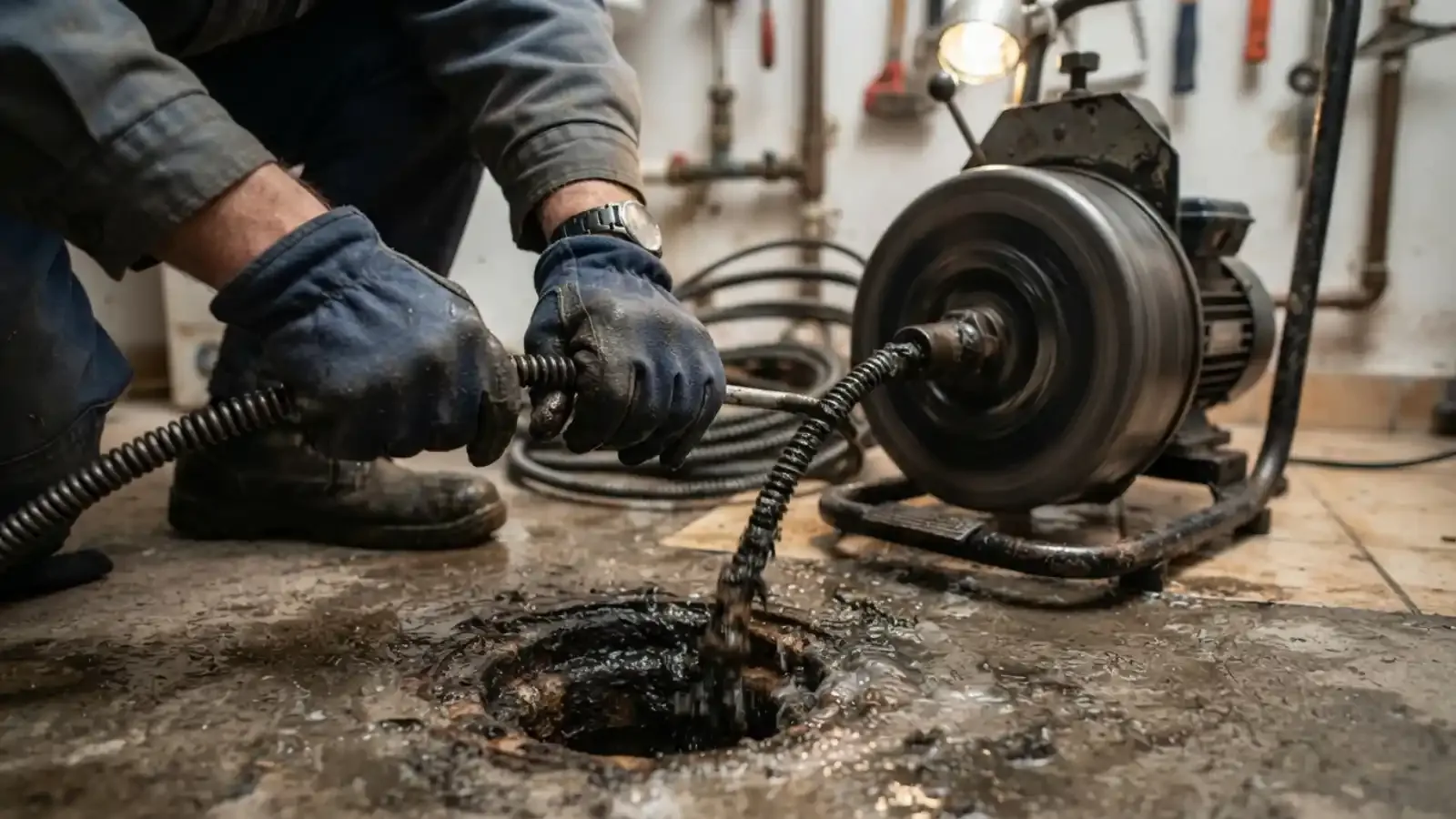
Plumbers choose from four basic approaches. A hand auger or closet auger handles toilets and short fixture runs. A drum machine drives a spring cable through branch lines. A sectional machine pushes heavier cable into larger drains. High-pressure water, covered on our hydro jetting page, scours the pipe wall instead of poking a hole.
The method follows the material and the cause. Soft hair and soap respond to a cable with a retrieving head. Hardened grease and scale call for a cutter blade or jetting. Tree roots in an older clay or cast iron line need a root cutter, and then a camera to see how much damage the roots have already done.
Unclogging a drain that keeps coming back
A clog that returns every few weeks is telling you something. The cleared pipe is not the problem. Something in the pipe is catching debris each time, and that catch point has to be found.
The usual causes are hair wrapped around a pop-up stopper, a rough joint, a belly (a low sag that holds water), a blocked vent, or grease cooled into a collar on the pipe wall. Flushable wipes and paper towels are another frequent offender, since they hold their shape long after toilet paper has broken down. Each cause leaves a different mark on a camera screen, and our camera inspection shows which one you have.
Why a quick fix can mean a repeat visit
A cable that punches a hole through grease clears the pipe for a short time. The grease along the walls then closes the opening again. If the same line has been snaked more than twice in a year, ask for a camera look or a scouring pass instead of another quick clearing.
Drain snaking and cabling, and when a cable is the wrong tool
Snaking is the right answer for a surprising number of clogs. A cable cuts through hair, soap scum, a toy, a rag or a root intrusion at a joint. It reaches the blockage with little mess and little disturbance, and the cost is the lowest of the options.
A cable is the wrong tool when the pipe is coated with grease or scale along its whole length. The cutter makes a core through the middle and leaves the walls untouched, so the pipe fills up again within weeks. It is also wrong where a pipe has collapsed or separated, because the cable can hang up in the gap and cause more damage to the pipe.
| Situation | Cable | High-pressure jet |
|---|---|---|
| Hair or a foreign object in a branch | Usually the right first choice | Not needed |
| Grease coating over a long run | Opens a channel only | Better choice for removing the wall buildup |
| Fine roots at joints | Cutter blade works for a short-term clear | Scours roots and growth back to the wall |
| Cracked, offset or collapsed pipe | Risk of snagging | Not suitable until a camera confirms the pipe is sound |
We say so up front when a cable will not be enough. If the symptom pattern points to buildup along the walls, you will hear that before work starts.
Kitchen sink and dishwasher drain clogs
Kitchen drains clog differently from bathroom drains because the main ingredient is grease. Warm cooking fat goes down liquid, cools inside the trap and the first few feet of pipe, and sets into a soft wax. Food scraps from the disposal then stick to it, and the clog gets thicker each week.
A double-bowl sink with the disposal on one side may back up into the other basin. That points to the shared trap arm or the branch behind it, and not the disposal itself. If the dishwasher drains into the disposal or the same trap, a blocked sink also means standing water in the dishwasher tub, which can leave a smell.
A plumber removes and inspects the trap, clears the horizontal arm with a small cable, and runs water for several minutes to confirm the line is moving. If the blockage sits farther down the wall, the cable goes through the cleanout or the access point instead. Scrape plates into the trash, wipe pans with a paper towel and keep fats out of the drain.
A leaking drain line is a different problem
Water that appears under a sink, on a ceiling below a bathroom, or beside a floor drain is not always a clog. A drain line can leak at a slip joint, a cracked trap or a worn seal while still carrying water away. Cleaning will not fix that, and the water-tight repair belongs to a leak-focused visit such as our leak detection work.
Renters, landlords and who calls the plumber
About 60 percent of Union City households rent, since only 40.4 percent of housing is owner-occupied (Census QuickFacts, 2020 to 2024). That means many of our calls come from tenants, property managers and absentee owners. If you rent, notify the landlord in writing right away and keep a photo of the water or backup. Some leases assign small clogs to the tenant and larger line problems to the owner, so check the lease before you pay.
Landlords can authorize the visit by phone and receive the findings. Tell the dispatcher if you are the tenant, the owner or a manager so we know who approves the work and where the report should go. When a blockage is in the building's main line, the repair is almost always the owner's responsibility, since it serves every unit.
The public sewer mains in Union City, about 91 miles in total, belong to the city. If your cleanout is clear and the backup remains, a plumber can tell you whether the blockage is on your side of the property line and where to take it up with the city.
Code and drain work
Drain, waste and vent systems are covered by the International Plumbing Code (IPC), which is also the base of Georgia's state plumbing code. Routine cleaning is maintenance. Opening a wall, replacing a trap arm or adding a cleanout is code work, and your plumber should say so before starting.
What changes the price of emergency drain cleaning
Which pipe is blocked
A fixture trap takes far less time than a main line that is forty feet from the cleanout. Pipe size also decides which machine and cable can be used.
Access to the drain
A pulled trap, a clear cleanout cap and open floor all keep the job short. A capped pipe behind a finished wall, or a toilet that has to be pulled to reach the line, adds labor.
Cause of the blockage
Hair and soap clear fast. Roots, hardened grease or a lodged object need heavier cutters or a camera, and that adds time.
Method required
A cable visit and a high-pressure scour are priced differently. We explain which one your pipe needs and why before work starts.
Time of the call
Nights, weekends and holidays are emergency hours. Same-day appointments when available can lower the cost of a non-urgent clog.
Homeowner policies typically respond to sudden and accidental water damage, such as a backup that ruins a floor, and may not cover the cleaning itself or damage that builds over time from a pipe in poor condition. Many policies require a separate sewer or water backup endorsement. Ask your insurer before the visit, and keep photos and the written invoice.
You get a clear price before work starts. Want your real number? Call (770) 214-4545.
Common questions about drain cleaning in Union City
Yes. Our 24/7 emergency line is answered around the clock, including weekends and holidays. Describe which fixtures are backing up and a licensed plumber is dispatched.
Yes. A slow drain in one fixture is usually a branch or trap problem. A main line clog affects several fixtures, often the lowest tub, shower or floor drain first, and it may bring water up when a toilet is flushed.
Remove the stopper and clear hair you can reach, flush with hot tap water, and use the sink less until help arrives. A slow drain that returns within a few weeks usually has buildup on the pipe wall, and a camera or a scouring pass will find it.
Showers and tubs fill with hair and soap, and their drain traps and pop-up assemblies catch it first. Pulling the strainer often shows the cause. If the water drains slowly even after that, the branch behind the tub needs a cable.
We advise against it. The chemicals can splash and burn skin and eyes, and they can leave standing water that is unsafe to handle. Tell the dispatcher if you already used some so the plumber wears the right protection.
It depends on the cause. A cable is the right choice for hair, objects and short blockages. If the pipe wall is coated with grease or roots, we recommend jetting, and we explain that choice before any work.
That depends on your lease and on the cause. Misuse of a fixture is often the tenant's cost, while a failing main line is usually the owner's. Notify your landlord in writing and keep photos before you authorize paid work.
Often yes. If the cleanout on your property is dry and clear but water still backs up, the blockage may be downstream in the public main. We tell you what we found so you can report it to the city.
Drain Cleaning across Union City and nearby towns
We serve Union City and nearby towns including Fairburn, Palmetto, College Park and Riverdale, and you can read about drain service in Fairburn too.
Questions about drain cleaning? Call the line and describe what you see.
Call (770) 214-4545