
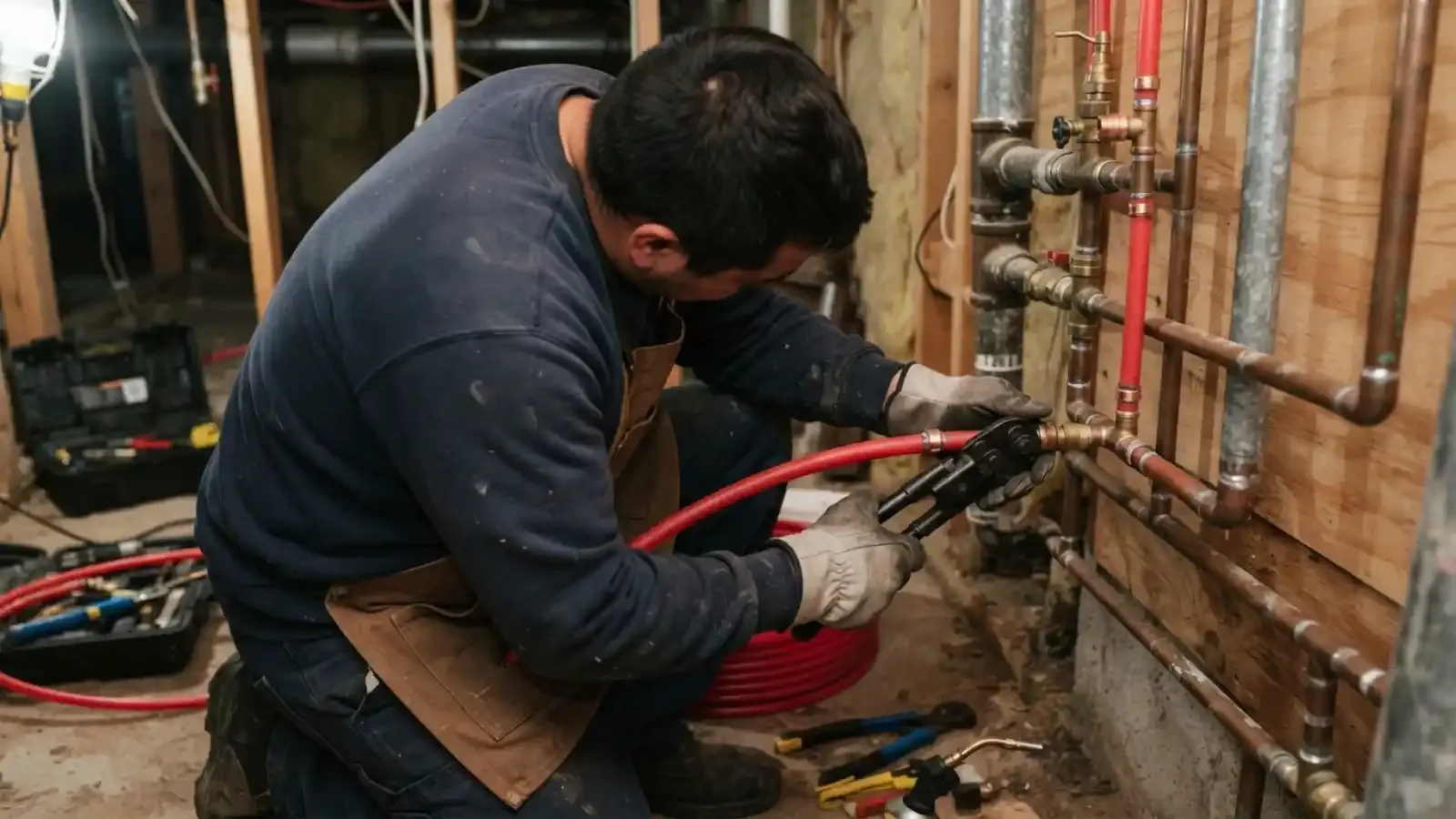
What decides the scope and cost of a repipe
Two houses with the same square footage can need very different repipes. A single-story home with an open attic is a different job from a two-story home with tile floors and few access points. Understanding the drivers before you collect quotes helps you compare them fairly.
Size of the system
The number of bathrooms, kitchens, hose bibs and appliance hookups decides how many feet of pipe and how many connections are needed.
Access to the old pipes
Attic, crawlspace and open basement runs are quick to reach. Pipes in finished walls, between floors or under a slab need more openings.
Pipe material chosen
Copper, PEX and CPVC differ in material cost, labor and tools, and the house may favor one over another.
Walls, floors and finishes
Tile, plaster, hardwood and fresh paint all raise the cost of opening and closing the building.
Permits and inspection
Permit rules vary, so ask Union City Community Development at (770) 515-7920 before work is scheduled.
Ask each plumber to write down which parts of the system are included. A quote that covers only hot and cold lines to the fixtures is not the same as one that also replaces the main shutoff, the water heater connections and the hose bib feeds.
Signs your pipes may be due for replacement
Not every old pipe needs replacing, and a single leak is not a reason to repipe. Patterns are what matter. Repeated pinhole leaks, rust-colored water at the tap, falling pressure at several fixtures, and visible flaking or green crusts on pipes all point to a system near the end of its useful life.
- Brown or rusty water that clears after running the tap often means corroding steel or iron pipe.
- Pressure that falls at several fixtures while the street pressure is normal can mean mineral and rust buildup inside galvanized pipe.
- A second or third pinhole leak in the same year suggests the pipe wall is thinning along its length.
- Wall stains or a spinning meter in a house with old pipe may need leak detection first, because not every leak means a failed system.
- Galvanized steel pipe in potable water service has a typical life of about 30 to 50 years, so a house with original galvanized supply lines deserves a closer look.
The first step is a visual inspection of the pipe material at the water heater, under sinks and at the meter. A plumber can tell galvanized steel, copper, CPVC, PEX and mixed systems apart in a few minutes. Test your tap if you want data about your water, because the city's water quality report does not list hardness or pH.
Ready to book repiping? Same-day appointments are offered when the schedule allows.
Call (770) 214-4545Copper, PEX or CPVC compared
| Material | Strengths | Limits | Good fit |
|---|---|---|---|
| Copper | Long track record, tolerates heat, and is a rigid metal pipe | Material price has risen over time, needs soldered or pressed joints, and can pinhole in some conditions | Exposed runs, homes where a metal system is preferred |
| PEX | Flexible, needs fewer fittings, resists chlorine and scale, and handles freezing better than rigid pipe | Cannot sit in sunlight, and needs specific fitting tools | Walls with tight bends, attic and crawlspace runs |
| CPVC | Rigid plastic with solvent-welded joints, and rated for hot water use | Needs the right solvent cement, and joints must cure before pressure | Straight runs, budget-minded jobs where the plumber favors it |
PEX has become the common choice in new homes because it bends around obstacles and needs fewer joints. PEX should not be left in direct sunlight, and one reference notes that as little as 30 days of exposure may cause failure, so storage and exposed runs matter. Copper is still widely used, though rising copper prices have moved many projects toward PEX and other materials.
Which one is right depends on the house and the plumber. Ask why a material is recommended for your layout, not only what it costs.
Partial repipe or whole house
| Situation | Partial repipe | Whole house |
|---|---|---|
| One bad line, with the rest in good shape | Replace only the failed branch | Usually not needed |
| Repeated leaks in different rooms | Short-term patching | Often the better long-term path |
| Galvanized pipe throughout, with low pressure | Leaves the old pipe to keep rusting | Removes the source of the problem |
| A remodel is already opening the walls | Good chance to do one wing at the same time | Works well if the whole system is tired |
A partial repipe is cheaper at the start but can leave a mixed system. Joining new pipe to old galvanized can cause leaks at the transition, so ask how the plumber will handle those joints. If you plan to sell, a clear record of what was replaced helps a buyer's inspector.
How a whole-house repipe is carried out
- The plumber inspects the system, locates access points and plans a route for each new line.
- Water is shut off at the main, and the old system is drained.
- Small access openings are cut in drywall, usually near closets, behind fixtures or in the attic floor.
- New lines are run to every fixture, with shutoff valves at the sinks and toilets.
- The new system is connected to the water heater and main, and pressure is tested before any wall is closed.
- Old pipe is capped or removed, and the walls are patched.
Water is typically off for part of the day while the main connections are made. Plan to be out or have a place to wash and cook. Most of the work happens in the attic, crawlspace and closets, so the living areas stay usable.
Drywall access, patching and finishing
Access is where a repipe disrupts a home. Small square openings are cut where the pipes run, then patched with drywall, taped and sanded. A plumber normally handles the access, while paint and texture matching may belong to a separate drywall or painting trade. Ask who handles patching and paint before the work starts.
In slab homes, the new lines usually go overhead through the attic and down the walls, which leaves the concrete alone. If a leak is already under the slab, the slab leak option may solve the immediate problem. Houses with tile floors and tight access are the ones where it pays to ask for a written plan.
Permits, licensing and local rules
Union City's permit page says permits are required for construction, alteration and repair, and they are issued to the certified contractor. The code listed there is the 2018 International Plumbing Code with Georgia amendments. Permit rules vary by scope, so ask Union City Community Development, the One Stop Shop, at (770) 515-7920.
Georgia licenses plumbers through the State Division of Master and Journeyman Plumbers. The classes include Journeyman, Class I Master, Class II Master and Statewide Master. Homeowners can verify any plumber by name in the state's online licensee search before signing a contract.
Renters and landlords
About 60 percent of Union City households rent, and a repipe is the owner's decision. If you rent and see rusty water or repeated leaks, document it with photos and dates, and send the evidence to the landlord in writing. Owners of rentals can benefit from a repipe that ends repeat repair calls, but tenants should be told about water shutoffs well ahead of the work.
Code and whole-house repipes
Pipe material and sizing for house supply lines are set by the International Plumbing Code (IPC), the base of Georgia's state plumbing code. Union City's permit page lists the 2018 IPC with Georgia amendments and says permits are issued to the certified contractor, so ask your plumber how a whole-house repipe will be permitted.
What changes the price of a repipe
House size and fixture count
More bathrooms and hookups mean more pipe and more connections.
Reach to existing pipe
Open attic access is the simplest, and finished walls or tight spaces add labor.
Material
Copper, PEX and CPVC differ in price and in how long installation takes.
Patching and finishes
Drywall, paint, tile and flooring repair can be separate scope from the plumbing.
Permits and inspection
The permit goes through the certified contractor and may add a step before walls close.
Wear and aging pipe are commonly excluded from homeowners coverage, so a planned repipe is usually paid by the owner. Water damage from a sudden burst is a different matter and may be covered. Ask your insurer before work and keep records either way.
The price is given clearly before work starts, and same-day appointments are offered when available for the first inspection. Want your real number? Call (770) 214-4545.
Common questions about repiping in Union City
A single leak in an otherwise sound system calls for a repair. Repeated pinholes, rusty water or falling pressure at several fixtures point to a failing system. A plumber can inspect the material and show you the pattern.
Not always, but galvanized steel supply pipe has a typical life of about 30 to 50 years, and it corrodes from the inside. If your home still has original galvanized lines and you see low pressure or discolored water, replacement is worth discussing.
The main shutoff is closed while the main connections are made, and the schedule depends on the size of the house. Ask the plumber for the plan on the day, and arrange a place to wash and cook.
Some access openings are needed, but they are usually small and located in closets, attics or behind fixtures. They are patched with drywall afterward. Ask who handles paint and texture.
The city says permits are required for construction, alteration and repair, and they are issued to the certified contractor. Permit rules vary, so ask Union City Community Development at (770) 515-7920.
Union City buys treated water from the City of Atlanta, and its 2023 report does not list hardness or pH. A plumber cannot blame the water without data, so test your tap if you suspect scale or corrosion.
A whole-house repipe is a planned job. The 24/7 line is for urgent breaks and leaks, so if a pipe is failing now, call and the emergency repair comes first.
Repiping across Union City and nearby towns
Repiping projects are scheduled for homes in Union City and nearby towns, including College Park, Fairburn, South Fulton, Palmetto and Riverdale.
Questions about repiping? Call the line and describe what you see.
Call (770) 214-4545