
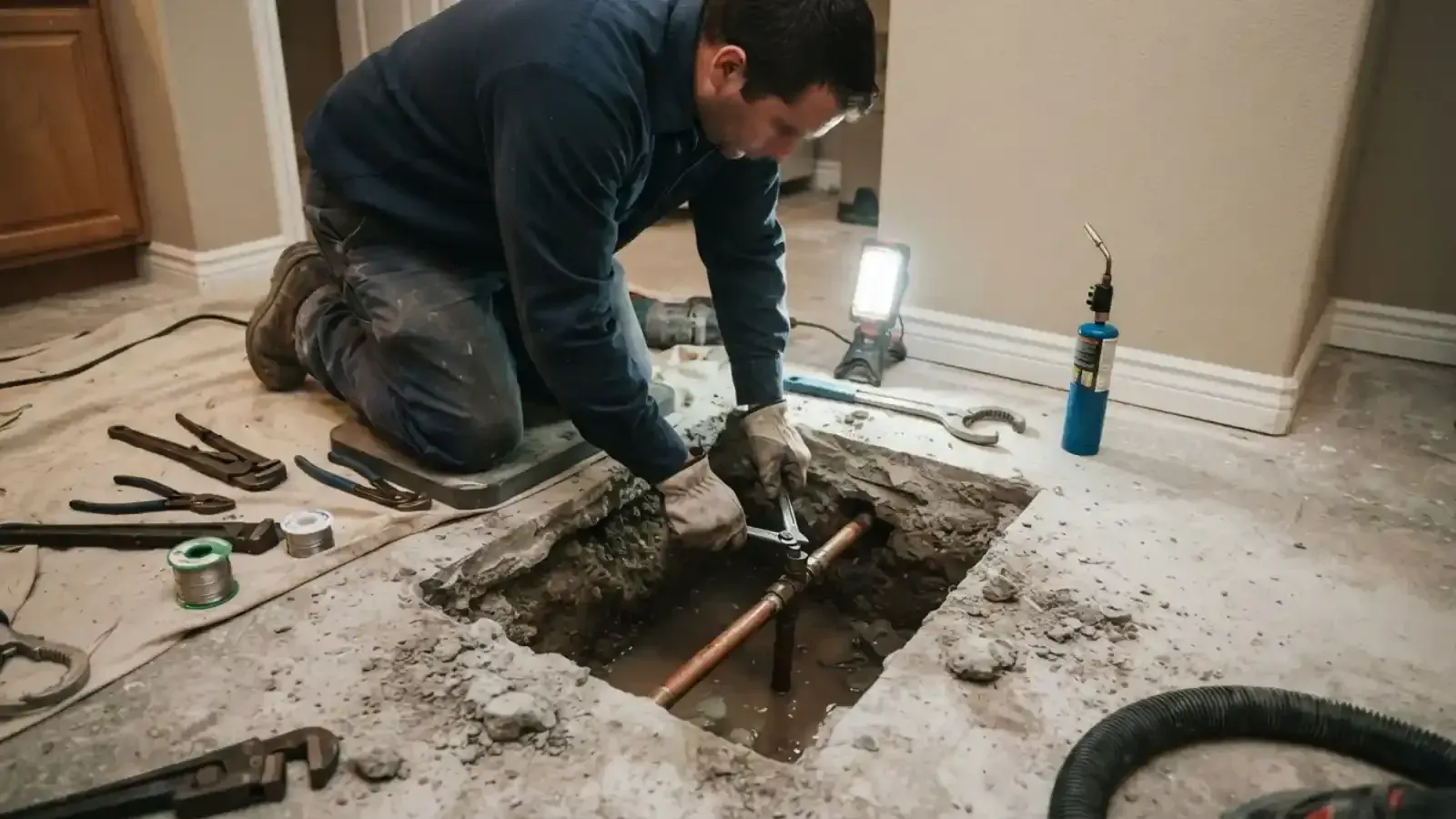
Why a slab changes the repiping job
In a house with a crawlspace, a plumber can slide under the floor and swap pipe from below. On a slab, the supply lines were often laid in the sand or gravel bed before the concrete was poured. A typical residential slab is about 4 inches thick, so the pipe sits under a solid layer that cannot be opened with a screwdriver.
That is why most slab repiping is really rerouting. The goal is not to dig out every old line. The goal is to stop using the buried lines and feed the fixtures another way.
Drain lines are a separate matter. Repiping normally means the pressurized supply side, which is the cold and hot water that runs from the meter to faucets, showers, the water heater, and appliances. Drains and sewer lines under the slab are handled with different tools and are not part of a standard repipe.
Three ways to replace pipes you cannot see
Plumbers use three main approaches on slab homes. Many jobs combine two of them, depending on how the house is laid out.
Overhead reroute
New lines run through the attic and drop down inside walls to each fixture. The slab is never opened, which keeps the dust and noise low.
Abandon in place
The old buried lines are cut off at both ends and capped. They stay under the concrete, unused, so nothing needs to be removed.
Access cuts
A saw opens a narrow strip of concrete over a failed line so that section can be replaced. The cut is patched with new concrete afterward.
Wall and cabinet runs
Where the attic is not usable, pipe can run along walls, through closets, or inside soffits. This is rarer and depends on the floor plan.
Overhead rerouting is the most common choice because it avoids the slab entirely. It does need a clear attic path and holes cut into drywall at each drop, which a plumber then patches or leaves for a drywall trade.
Not a good time for a DIY fix? The 24/7 line is open and the price comes first.
Call the 24/7 line (770) 214-4545How the methods compare
| Method | What happens to old pipe | Disruption inside the home | Usually a good fit when |
|---|---|---|---|
| Overhead reroute | Capped and left under the slab | Drywall openings at drops, attic access, water off for part of the day | Several fixtures are affected or pipe is aging |
| Abandon in place | Cut at both ends and left | Low, since it pairs with another method | Old lines are failing but a full dig is not worth it |
| Access cut | Failed section removed and replaced | Concrete saw, dust, a patched strip of floor | One line leaks and the rest tests sound |
| Wall or cabinet run | Capped and left | Visible pipe or boxed-in runs | The attic is unusable or too tight |
Notice that none of the four rows involves removing the whole slab. That option exists on paper but is rare because it means moving out and rebuilding floors.
What the work looks like from your side
A repipe is not a single event. It follows a rhythm, and knowing it helps you plan around the water being off.
- The plumber tests the existing lines and maps which fixtures connect to which buried pipe.
- The main shutoff is closed, and the old supply is isolated and capped where it enters the slab.
- New pipe is run through the attic and down the walls, with a shutoff valve at each fixture group.
- Fixtures, the water heater, and appliance connections are reconnected to the new lines.
- The system is filled, pressure-tested, and checked at every joint before anything is closed up.
- Wall openings are patched or handed off for drywall and paint.
Expect the water to be off for much of a working day while lines are tied in. Plan showers, laundry, and cooking around that. Floors are usually covered, but you should still clear closets and wall space where the plumber will cut.
An attic reroute through a typical single-story house can pass over several rooms. Ask which rooms will get drywall holes before the day starts, so furniture can be moved.
Spot repair or a whole-house reroute
A spot repair makes sense when one line has failed and the remaining pipe is in good shape. The leak must be located first, which means a meter check, a pressure test on isolated sections, and electronic listening. Our guide to repairing a leak under the slab explains that process in more detail.
A reroute makes sense when the same house keeps developing leaks, when the pipe material is known to fail, or when the leak sits under tile or cabinets that a concrete cut would wreck. Three leaks in the same few years is a pattern, not bad luck.
| Situation | Leans toward |
|---|---|
| One confirmed leak, rest of the system tests sound | Spot repair through an access cut |
| Second or third leak on buried supply lines | Overhead reroute |
| Leak sits under a bathroom, kitchen island, or tile | Reroute, to avoid cutting finished floors |
| Home will be sold soon and lines test sound | Spot repair, with the test results kept on file |
If a spot repair is chosen, ask the plumber how the other buried lines tested. A repair that fixes one leak while the next is already forming only buys a short break.
Anyone weighing a full replacement can read how whole-house repiping is scoped, including what gets replaced and what stays.
Signs the buried lines are failing
- The water meter keeps moving after every fixture and appliance is off.
- A warm or hot patch appears on the floor, often over the line from the water heater.
- You hear water running when nothing is on, or a faint hiss from the floor.
- Water bills climb with no change in how you use water.
- Baseboards swell, flooring lifts, or a damp smell shows up along a wall near the slab edge.
- Water pressure drops at several fixtures at once.
The meter test is simple. Note the reading, use no water for two hours, and read it again. If the number changes, a leak exists somewhere after the meter. The EPA recommends this check on its WaterSense leak pages, and it costs nothing to run.
Questions to ask before you agree to a plan
A clear plan should answer a short list of questions. If a plumber cannot answer them, ask for the answers in writing before work starts.
- Which lines are being replaced, and which are being abandoned under the slab?
- What pipe material is going in, and where will the shutoffs be?
- Which walls and ceilings will be opened, and who patches them?
- How long will the water be off, and which fixtures will work during the job?
- Will a permit be pulled, and who is listed on it?
- How will the new system be pressure-tested before the walls are closed?
A clear price before work starts should list these items. If a quote is a single line with no scope, treat it as unfinished.
Renters, landlords, and slab leaks
About 60% of Union City households rent, so many slab problems start with a tenant noticing a high bill or a warm floor. Tell the landlord or property manager in writing, and keep the dates. Tenants should not authorize repiping on a rental, and landlords usually need the owner or management company to approve the scope.
Document what you see with photos of the meter, damp spots, and any damaged belongings. That record helps if the cause or the timing is ever disputed.
Slab homes are common well beyond Union City. If you own a similar house in Fairburn or rent one in Riverdale, the same meter test and the same questions apply. Each town still has its own water utility and permit office, so confirm who to call before you assume Union City rules carry over.
What repiping a slab house means in Union City, GA
Union City buys its water from the City of Atlanta and delivers it through its own network of about 112 miles of water line. That means a leak on your side of the meter is yours to fix, but a wet spot at the street side is a city matter. Before you hire anyone, call the city water office at (770) 306-6855 and ask if the problem might be on the utility side.
The city's permit page says permits are required for construction, alteration, and repair, and that they are issued to the certified contractor. Permit rules vary by job, so ask Union City Community Development at (770) 515-7920 whether a repipe needs one. A pulled permit also puts the work on record, which helps at resale.
The city's permit page lists the International Plumbing Code, 2018 edition, with Georgia Amendments. That is the code the plumber works to, so ask which pipe material and joining method the plan uses and confirm it with the inspector's office before you sign.
Questions homeowners ask
Usually not. The most common plan is to cap the old lines under the slab and run new pipe through the attic and walls. A saw cut is only needed when one buried line is being repaired in place.
In most reroutes they are cut off at both ends and left in the ground, unused. They hold no water once capped, so they do not cause leaks. Mention the abandoned lines in your records so a future owner knows they are there.
It depends on how many leaks the house has had and what the rest of the lines test like. One leak with sound pipe elsewhere often calls for a spot repair. Repeated leaks usually point to a reroute.
It is off for part of the working day while the plumber ties into the main and reconnects fixtures. Ask for the plan on the morning of the job, since it varies by house size. Keep a few gallons stored for drinking and flushing.
Not by eye alone. A running meter with all fixtures off says a leak exists, and a warm floor patch suggests a hot line. A plumber isolates sections with a pressure test and then listens electronically to pinpoint the spot.
Start with the meter test, then call a licensed plumber at (770) 214-4545 if it moves. If the wet spot is between the meter and the street, call the city water office at (770) 306-6855. The city's permit office at (770) 515-7920 can say whether the repair needs a permit.