
Several fixtures backing up at once
The clearest sign of a main sewer blockage is that more than one drain acts up. A toilet gurgles when the shower runs. The tub drain bubbles when the washer empties. Water rises in the lowest fixture in the house, which is the first place a full pipe has to overflow.
A single slow sink almost always points to a short branch or trap. Multiple fixtures point to the line they all share. That line starts where the drains join under the floor or in the crawlspace and runs to the connection with the city sewer.
When you call, tell us exactly which fixtures are affected and which is lowest. That pattern lets the dispatcher choose a cable machine, a jetter or a camera, and it saves time on arrival. Smaller clogs belong with our drain cleaning service.
The floor drain gurgle and the washer overflow
A floor drain that gurgles, bubbles or smells of sewage is often the first warning. Floor drains sit low and connect directly to the main, so they react to a restriction before any other fixture does. A laundry standpipe that overflows during the spin cycle gives the same signal, since a washer discharges several gallons in seconds.
Do not ignore these signs because the water goes down eventually. A line that drains slowly is a line that is partly blocked, and the next heavy use can close it. Roots, grease, flushed wipes, a settled joint or a collapsed section can each be the cause.
Need sewer line cleaning help right now? Dispatch is open 24/7 and the price is explained before work starts.
Call the 24/7 line (770) 214-4545When a sewer backup cannot wait
- Sewage or gray water is coming up in a tub, shower or floor drain.
- Every toilet in the house is slow, and plunging does not help.
- A sewage smell fills a room, the garage or a utility closet.
- A cleanout cap in the yard has water standing at or near the top.
- A rental or small commercial space has lost bathrooms or a kitchen drain.
If any of these fit, call (770) 214-4545 at any hour. Raw sewage on a floor is a health issue as well as a property one, so dispatch does not wait for business hours.
Find the cleanout before the plumber arrives
A cleanout is a capped pipe, usually three or four inches across, that gives direct access to the sewer line. It is often white plastic or black cast iron, and it sits in one of a few places. Looking now saves the crew time when they arrive.
Outside, near the foundation
The most common place. Look along the front or side of the house, close to where the main line leaves the building.
In the yard
Some lines have a cleanout a few feet from the property line or near the street connection. A flush cap in the grass or a short pipe with a threaded cap is typical.
In a crawlspace, garage or utility room
Older homes may have the access point inside. Check near the water heater or along the lowest wall.
None at all
Some older lines have no cleanout. The plumber may remove a toilet or use a roof vent to reach the line, and a cleanout can be added during the visit.
Do not open a cleanout cap if sewage is already near the top. Pressure behind the cap can send water out quickly. Wait for the plumber, who will open it with a bucket, tarps and protective gear in place.
What to do while you wait
- Stop all water use, including laundry, dishwasher and showers. Every gallon you send down the drain ends up in the lowest fixture.
- Do not flush. If a toilet is the only one working, ask household members to use another restroom for now.
- Keep chemical drain products out of the line. They splash on skin and eyes, and they make the plumber's job riskier.
- Move rugs, boxes and electronics off the lowest floor.
- Photograph any water on the floor and save the pictures with the date visible. If you rent, send them to your landlord.
Keep children and pets away from areas where sewage reached the floor. Hard surfaces can be cleaned with household disinfectant, but carpet, drywall and padding soaked in sewage usually need professional removal.
How a main sewer drain gets cleared
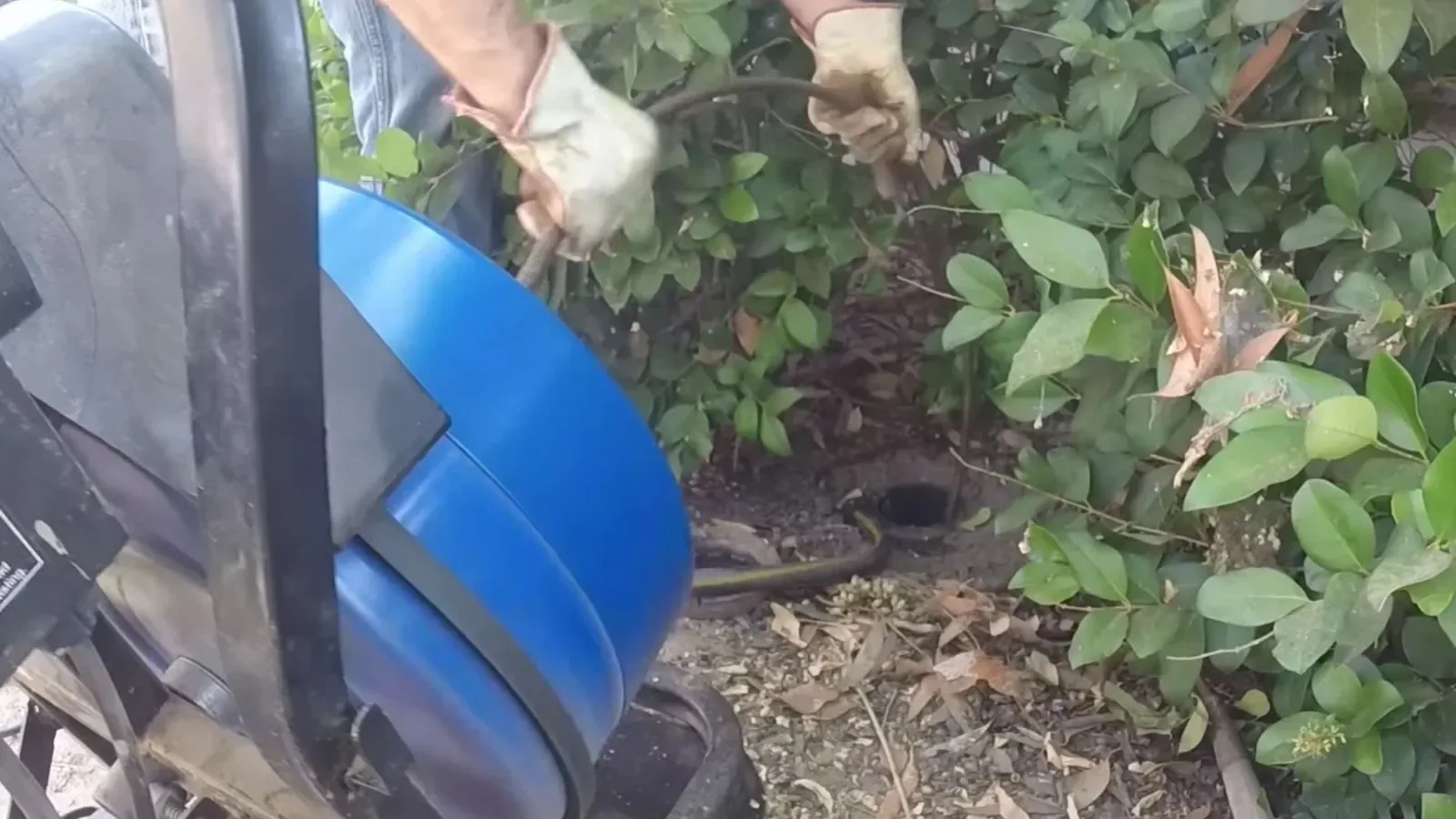
Main sewer cleaning is a step-by-step job. The plumber opens the cleanout and runs a heavy cable machine with a cutting head into the line. Blades chop roots and push through paper, wipes and grease. If the line is coated with buildup, the crew may follow with a hydro jetting pass to wash the walls.
After the line flows again, a camera pass shows why it blocked. Without it, you only know the symptom is gone. A camera shows whether the cause was a one-time object or a defect such as roots entering at a joint or a belly that traps solids.
Cleaning does not repair a broken pipe. If the video shows a crack or collapse, the answer is repair, which is covered in our sewer line repair page. A clean line with a sound pipe, on the other hand, may only need a periodic maintenance visit.
Cleaning versus repair, side by side
| Cause of the backup | Does cleaning fix it? | What comes next |
|---|---|---|
| Grease, paper or wipes caught in a sound pipe | Yes, usually | Change habits and clean again only if needed |
| Roots at a joint | Clears them for a time | Camera, then lining or spot repair to stop regrowth |
| Belly or low spot | Clears the blockage only | Camera and a repair plan if it holds waste |
| Cracked or collapsed pipe | No | Repair or replacement |
| Blockage in the city main | No, on private property | Report to the city after the plumber confirms |
Union City owns and maintains about 91 miles of public sewer main. Your private line ends at the connection to it. If your cleanout is dry and clear and the backup continues, ask the plumber whether the blockage sits in the city's section so you know who to call.
Renters and owners with sewer backups
About 60 percent of Union City households rent (Census QuickFacts). A tenant should call the landlord or manager at once and note the time of the backup in writing. The owner generally controls the building sewer, so authorization for a main line visit is usually theirs. Tell our dispatcher who approves the work.
Why cleanouts matter
The International Plumbing Code (IPC) calls for access points called cleanouts on building drains, and they are what make cleaning possible without digging. If yours is missing or buried, ask the plumber to locate it or to propose adding one.
What changes the price of sewer line cleaning
Cleanout access
An open exterior cleanout is quick to use. If there is none, removing a toilet or installing a cleanout adds work.
Length and size of the line
A short lateral to a nearby main costs less time than a long run with several bends.
What is blocking it
A soft stoppage clears fast. Dense roots or thick grease require cutting heads or jetting, and that adds time.
Camera follow-up
A recording after cleaning is an added step, but it shows whether the line is sound.
Hour of the call
Night, weekend and holiday dispatches are emergency hours. Same-day appointments when available are priced lower for non-urgent cleaning.
Cleaning a line is usually treated as maintenance. Damage to floors from a sudden backup may be covered if your policy has water or sewer backup coverage. Ask your insurer before the visit and keep photos, the invoice and the camera recording.
You get a clear price before work starts. Want your real number? Call (770) 214-4545.
Common questions about sewer line cleaning in Union City
Yes. Our 24/7 emergency line takes calls at all hours. Tell us which fixtures are backing up and a licensed plumber is dispatched.
It is a blockage in the pipe that collects all the drains in the building and carries them to the city sewer. It causes several fixtures to back up together, with the lowest one showing it first.
A clogged sink affects one fixture and sits in a short branch. A mainline blockage affects the shared pipe, so tubs, floor drains and toilets all react.
If the cause was a one-time object or buildup in a sound pipe, often yes. If roots, a belly or a crack caused it, the problem is likely to return until the pipe is repaired.
Most often outside near the foundation, sometimes in the yard, a crawlspace or a utility room. If you cannot find one, the plumber will locate access and may add a cleanout.
A plunger can help with a toilet that is blocked on its own. A main line needs a cable machine or a jetter. Renting one is risky because cutting heads can snag and hurt the pipe or the user.
Sewer drain cleaning targets the main building drain and the line to the city. Drain cleaning covers fixtures and branches inside the building.
If the blockage is in the public main, the city is responsible for that section. The plumber will tell you what they saw so you can report it.
Sewer Line Cleaning across Union City and nearby towns
We clear sewer lines in Union City, Palmetto, South Fulton, College Park and Riverdale, and in the nearby town of Fairburn.
Questions about sewer line cleaning? Call the line and describe what you see.
Call (770) 214-4545