
Find where the water comes from before you buy a pump
A pump only moves water that reaches the pit. If the water is coming from a downspout, a sagging gutter, or a flat yard, the pump will run often and the cause will remain. Walk the outside of the house during a hard rain and watch where the water goes.
- Check that gutters are not overflowing and that downspouts drop water several feet from the wall.
- Look for soil that slopes toward the foundation instead of away from it.
- Note any low spot in the yard where water pools for a day or more.
- Inside, find where the water enters and whether it appears at the wall base, the floor joint, or a crack.
- Check whether the wet spot is steady even in dry weather, which can point to a plumbing leak.
That last item is the one people miss. A damp crawlspace in dry weather can come from a pipe, and a plumbing leak detection visit can rule that out before any pump is installed.
Georgia clay and what it means for water
The Georgia Piedmont is known for red clay. The USDA's Cecil series, a typical upland soil in the area, has a sandy loam surface over a red clay subsoil, and the series sits in a 45 to 55 inch annual rainfall range. That is enough rain to keep soil wet for long stretches.
The USDA classes the Cecil series as well drained, but clay still drains more slowly than sand. After a long rain, water can sit against a foundation or slow-drain through a yard. Your own lot may differ from the series description. Local soil maps and a drainage contractor can say more.
The practical point is simple. In clay country, controlling where roof and surface water goes matters as much as any pump. A pump takes care of what reaches the pit, and grading keeps most of it from arriving.
Not a good time for a DIY fix? The 24/7 line is open and the price comes first.
Call the 24/7 line (770) 214-4545Who handles which part of the job
| Task | Typically handled by |
|---|---|
| Install sump pit, pump, check valve, and discharge pipe | Licensed plumber |
| Run the discharge line away from the house | Plumber, sometimes with a drainage contractor |
| Regrade the yard or build a swale | Grading or drainage contractor |
| Install french drains around the foundation | Drainage or waterproofing contractor |
| Seal foundation cracks or apply wall waterproofing | Waterproofing contractor |
| Fix gutters and downspouts | Roofer or gutter installer |
Our plumbers cover the first two rows. The rest belong to other trades, and it is better to hire them directly than to hear promises about work a plumber is not set up to do.
Basement, crawlspace, or slab, where a pump fits
A sump pit needs a low point that collects water. A full basement has one built in, and a pit is cut in the floor. Crawlspaces can also hold a small pit, but they are usually shallow, and the fix is often vapor barriers and grading.
Many Piedmont homes sit on slabs or crawlspaces instead of full basements, so check what you have before assuming a pump is the answer. A slab house has no space below the floor to hold a pit, and moisture there often means a surface or plumbing problem.
If you do have a below-grade space that floods, a pit with a pump is a standard fix. If you have a shallow crawlspace that is just damp, ask a contractor whether the problem is surface water first.
What a sump pump system includes
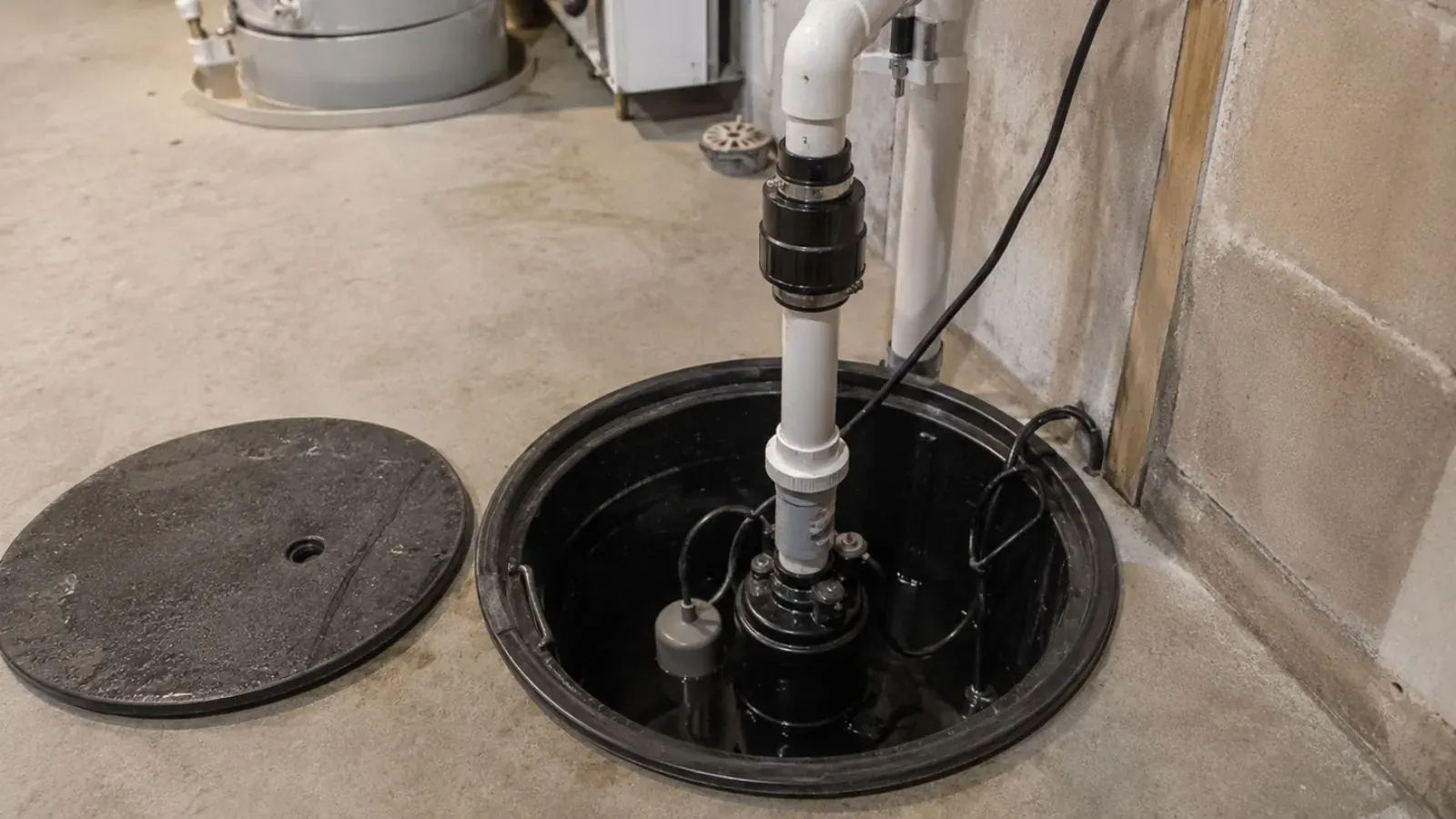
The parts are simple, but each one affects how long the system lasts. These are the standard parts of a residential system.
Basin
A standard U.S. basin is at least 18 inches across and 30 inches deep. It holds roughly 15 to 25 gallons and has an inlet for a 4 inch drain.
Pump
A submersible pump sits sealed in the basin and is the most common type. A pedestal pump has its motor above the basin and is cheaper but wears faster.
Float switch
A float or pressure switch turns the pump on as water rises and off when the basin empties.
Check valve
A one-way valve stops water in the discharge pipe from flowing back into the basin. Debris can jam it.
Discharge pipe
This pipe carries water away from the house. Restrictions or kinks make the pump work harder and can cause overheating.
A battery backup pump can take over during a power failure, and it has its own battery and charger. Backups are rarely used, so test them. Storms that cause flooding are often the same storms that knock out power.
Where the water goes, discharge rules
Discharge is the part most homeowners get wrong. Water should flow to a storm drain, a dry well, or an open area downhill from the house. It should not go into the sanitary sewer.
Sump discharge into the sanitary sewer may violate plumbing code or local rules because it can overwhelm sewage treatment, and fines may apply in some places. Rules differ by city, so ask your local permit office before connecting to any drain.
The discharge line should end well away from the foundation and from a neighbor's yard. Pointing it at a neighbor can lead to a dispute, and water that returns to your own wall defeats the purpose. A pipe that runs through the yard may need trenching, which calls for a utility locate first.
How a plumber installs a sump system
- Pick a low point for the pit and check that the floor or ground can be opened there.
- Cut the opening, remove the soil or concrete, and set the basin level on a gravel bed.
- Place the pump, set the float so it moves freely, and install the check valve on the discharge line.
- Run the discharge pipe through the wall or rim joist and out to the chosen outlet.
- Seal the basin lid and the wall opening, then test by pouring water into the pit.
- Check that the pump starts, empties the pit, and shuts off without cycling too often.
The test in step five matters. Pour water in until the float rises, watch the pump run, and check that the check valve holds back flow. A pump that has never run is a pump that has never been proven.
Landlords, renters, and flooded spaces
About 60% of Union City households rent. A tenant who finds water in a crawlspace, garage, or storage area should report it in writing with photos and dates. Do not install a pump or cut into the floor in a rental without the landlord's approval.
Owners of rentals should find the cause before paying for equipment. An overflowing gutter is a cheaper fix than a pump, and a clear record of the cause helps with insurance and with any later dispute. For a similar problem outside Union City, the same logic applies in Riverdale or South Fulton, though each place has its own sewer and permit rules.
Planning the work with a plumber
When you call, describe where the water shows up, how often, and what the weather was like. Ask what the plan includes, where the discharge ends, and whether a backup pump fits. Our plumbing installation page covers new pump and discharge work as part of the plumbing scope.
If the plumber thinks the root cause is outside plumbing, you should hear it plainly and get a referral to the right trade. Call (770) 214-4545 to talk through the situation before anyone opens a floor.
Union City's sewer, permit, and 811 rules for a sump system
Union City owns and maintains its own sewer system, about 91 miles of line, and buys its drinking water from the City of Atlanta. Because the city runs the sewer, ask the city water and sewer office at (770) 306-6855 before you consider tying any sump discharge into a sewer drain. Sump water in the sanitary sewer is a practice many places restrict, so the call can save a fine.
The city's permit page says permits are required for construction, alteration, and repair, and are issued to the certified contractor. Permit rules vary by job, so ask Union City Community Development at (770) 515-7920 whether a new pump and discharge line needs one. The city enforces the 2018 International Plumbing Code with Georgia amendments.
If the discharge line needs trenching across the yard, call 811 before anyone digs. Georgia 811 says its service is free, and it is encouraged even for small projects that are not legally required to report.
Questions homeowners ask
Usually not. A slab house has no basement or deep crawlspace for a pit. Water around a slab house is more often a surface drainage or gutter problem, which a drainage contractor can assess.
A plumber can install a pump, a pit, and the pipe that carries discharge water away. Regrading, french drains, and foundation waterproofing are done by drainage and waterproofing contractors. We say so up front instead of promising work outside plumbing.
Rules vary by city, so ask your permit office. A storm drain, a dry well, or an open area downhill from the house is the usual approach, and sanitary sewer connections are widely restricted. In Union City, start with Community Development at (770) 515-7920.
A standard U.S. basin is at least 18 inches across and 30 inches deep and holds roughly 15 to 25 gallons. Your plumber sizes the basin and pump to your space and expected water flow.
It is worth considering if your pit protects finished space or stored belongings. Storms that fill a pit can also cut power. Backups are rarely used, so test them on a schedule.
Call (770) 214-4545 if you suspect a plumbing leak or need a pump and discharge line installed. If the water follows rain, ask a drainage contractor to check grading and gutters. Call the city water and sewer office at (770) 306-6855 before sending any discharge to a sewer.