
Check 1 is the two-hour meter test
Start here, because it tells you whether any leak exists. Shut off every faucet, appliance and irrigation zone, and make sure no one flushes. Then read the water meter, wait two hours with no water use, and read it again. The EPA says that if the reading changes at all, you probably have a leak.
Most meters sit in a box near the curb, often in line with the outdoor spigot. Lift the lid with a large screwdriver, never your fingers, because insects and small animals like those boxes. Many meters also have a small low-flow dial or triangle that spins at even a trickle, so you can see movement in seconds instead of hours.
- Turn off all water use inside and outside, including the ice maker and humidifier.
- Write down or photograph the meter digits and the position of the low-flow dial.
- Wait two hours with nothing running, then read it again.
- If the numbers or dial moved, a leak exists somewhere between the meter and your fixtures.
- Close the main shutoff valve at the house, wait a few minutes, and check the dial again. If it still moves, the leak is on the line between the meter and the house.
That last step splits the problem in two. A moving meter with the house valve closed points to the outdoor service line, which needs professional leak detection with listening gear. A meter that stops when the valve is closed points to a leak inside the house.
Check 2 is the toilet dye test
Toilets are the most common quiet leak. A worn flapper lets water seep from the tank into the bowl, and the fill valve then tops it off, so you hear nothing and see nothing. The EPA says most toilet leaks come from old or worn flappers.
Add a few drops of food coloring to the tank and do not flush. If color shows in the bowl after 10 minutes, the toilet is leaking. Flush right away afterward so the dye does not stain the tank.
The EPA suggests checking flappers regularly and replacing them at least every five years. A new flapper is a small part and a short job for most owners. If the leak continues after that, the flush valve seat may be worn, and that is a good time to call for toilet repair instead of chasing parts.
Not a good time for a DIY fix? The 24/7 line is open and the price comes first.
Call the 24/7 line (770) 214-4545Check 3 covers supply valves and the cabinet under each sink
Slow drips at supply stops and connectors rarely show on a bill, but they rot cabinet floors. Dry a connection with a paper towel, press the towel against it, and look for a damp spot. Do this at every sink, toilet and tub.
Look for white or green crust on brass fittings, which means water has been weeping there for a while. Check the shutoff valve stem too, since old multi-turn valves often leak around the handle. Do not overtighten a corroded nut, because it can crack and turn a drip into a flood.
- Dry the supply line, press paper on each fitting, and check for dampness after 10 minutes.
- Look for swollen, stained or soft cabinet bottoms and a musty smell.
- Run the faucet and check the drain trap for drips under load.
- Check the braided supply lines for bulges, rust at the ends or frayed wire.
Check 4 is every appliance hose
Washing machine hoses, dishwasher lines and refrigerator ice maker tubes fail more often than pipes in the wall. Pull the machines out if you can and inspect the hoses and the valves behind them. Look for bulges, cracks, rust on the fittings and water stains on the floor.
Rubber washer hoses can bulge or burst under constant pressure, so inspect them and ask a plumber about braided stainless hoses if yours look tired. If you are leaving for more than a few days, close the washer valves as part of your routine. It takes ten seconds and removes a common flood risk.
An ice maker line is a thin plastic or copper tube that can leak behind the refrigerator for months. A damp spot on the floor or a warped baseboard near the fridge is a clue. Check it every time you clean behind the appliance.
Check 5 is the water heater
Look at the base of the tank for a pool or rust trail, and check the temperature and pressure relief valve discharge pipe for drips. Feel the cold and hot connections at the top for moisture. A tank that leaks from the body cannot be patched, because the steel liner has failed.
Gas and electric units add safety limits. Do not open panels on an electric water heater, and do not work near a gas unit if you smell gas. Leave the house and call the gas company from outside. If the tank is leaking, shut off the cold supply valve above it and call for water heater repair or a replacement quote.
Check 6 is the yard, irrigation and hose bibs
Outdoor leaks hide in plain sight because the water soaks into the ground. Walk the yard after a dry day and look for soggy turf, a spot that stays green while the rest browns, or a patch of mud with no rain. Those signs can point to a leak on the service line or a broken sprinkler line.
The EPA notes that a 1/32 inch hole in an irrigation line can waste about 6,300 gallons a month. Turn each irrigation zone on and look for geysers, misting heads and low pressure. Check hose bibs for a drip at the stem, and make sure a hose left attached is not holding the bib open.
Check 7 is walls, ceilings, floors and your nose
Hidden pipe leaks leave clues. Look for stains that grow, paint that bubbles, warped trim, hot or damp spots on a floor, and a musty or earthy smell in a closet or cabinet. A flashlight held at a low angle across a wall shows ripples that overhead light hides.
| Sign | Common cause | DIY or call |
|---|---|---|
| Ceiling stain that grows after a shower | Supply or drain leak above, or a failed tub seal | Call, and stay out from under a sagging ceiling |
| Musty smell with no visible water | Slow leak in a wall, cabinet or crawlspace | Dry out the area and call if it returns |
| Warm spot on a floor | Hot water line leaking under a slab | Call, because slab leaks need pinpointing tools |
| Damp baseboard near an appliance | Hose or drain connection leaking | Shut the valve, replace the hose, dry the area |
| Meter moves with the house valve closed | Leak on the service line outside | Call, and report it to the water provider |
A mold smell means moisture has been present for a while. If you see widespread growth or anyone in the home has breathing problems, call for help and do not scrub it dry with the leak still running. A burst pipe repair visit stops the source, and the drying and mold cleanup are separate steps.
Check 8 is your own bill history
Compare this month's usage with the same month last year. The EPA says that in a colder month such as January or February, a family of four using more than 12,000 gallons a month could have serious leaks. That is a rule of thumb, not a diagnosis, but a sudden jump with no change in habits is worth a meter test.
A bill that rises gradually over months can point to a worn flapper or dripping fixture. A sharp spike often means a break, an irrigation fault or a filling pool. Keep the bills together, because a plumber or the utility will ask for them.
When to stop and call
Stop DIY and call if
Water is coming through a ceiling or light fixture. Stay clear, turn off the main water valve, and do not touch switches or fixtures near the water. Switch off that circuit at the breaker only if you can reach the panel without standing in water.
You smell gas, the leak is near electrical equipment, or the meter keeps moving after the house valve is closed.
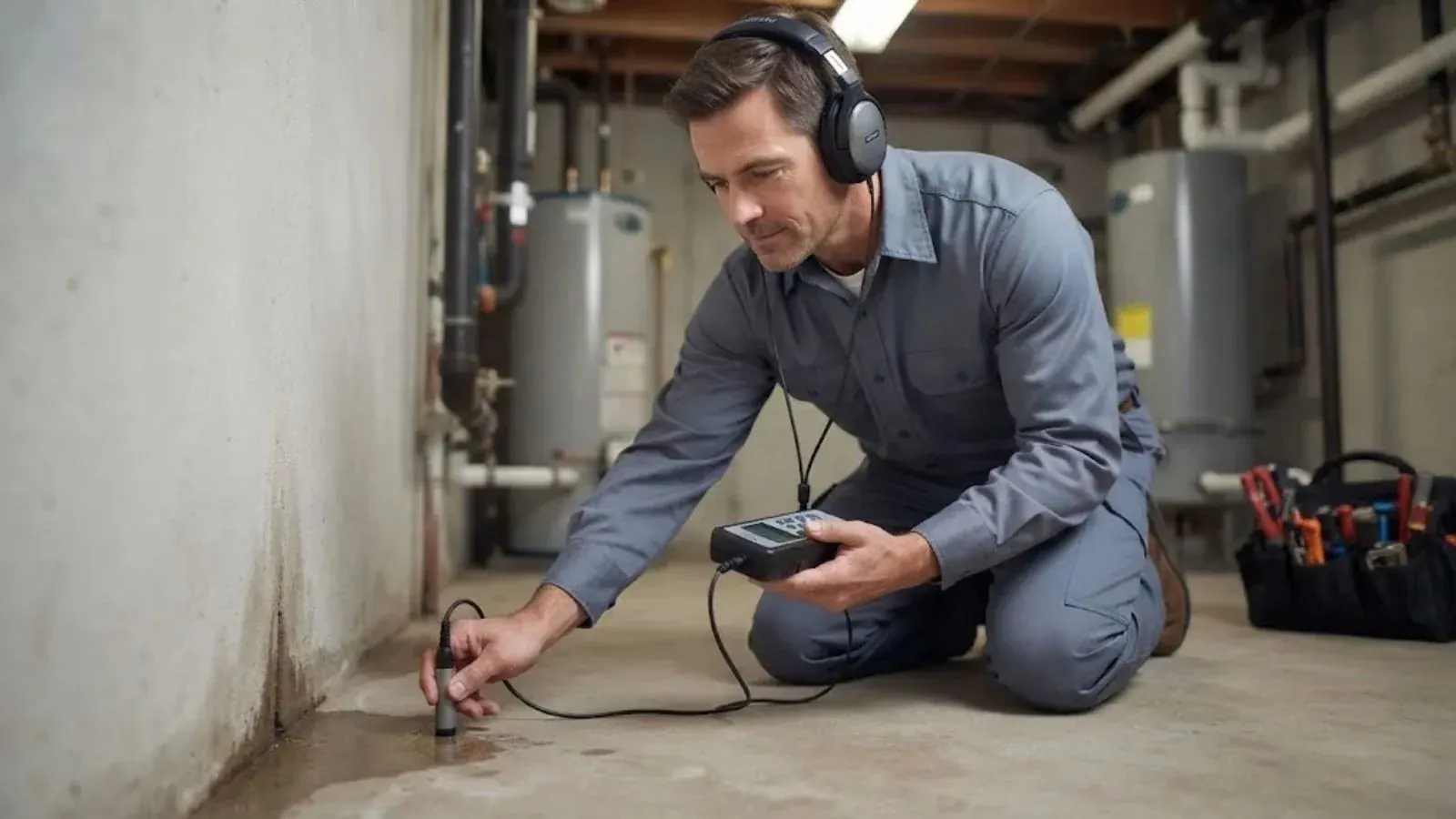
DIY checks find the easy leaks. They cannot see inside walls, under a slab or along a buried line. If the meter test fails and you cannot find the source, a technician uses acoustic listening devices, pressure tests and thermal cameras to locate it without tearing out a whole wall.
Call (770) 214-4545 if you are unsure. Our line is open 24/7 for emergencies, and we give a clear price before work starts. Never dig near a suspected buried line without calling 811 first.
Renting changes the next step
If you rent, tell the landlord or property manager in writing as soon as you find a leak, and include photos and meter readings. Do not hire a plumber on your own unless the lease or an emergency requires it. A written record protects you if damage or a high bill is disputed later.
If an emergency forces you to shut the main valve, do that and report it. Cutting off water to stop damage is reasonable, and most leases expect it. Leave the repair decisions to the owner. Tenants in Riverdale and College Park follow the same written-notice habit, and the same meter checks apply there.
Where DIY stops
Homeowners can find a leak themselves, but repairs to supply and drain piping are covered by the International Plumbing Code (IPC), the base of Georgia's state plumbing code. A pinhole on an accessible pipe is one thing. A leak inside a wall or slab is a job for a licensed plumber who can pull a permit if one is needed.
Leak responsibility in Union City, GA
The City of Union City's Water Leak Detection guidance says soggy soil, standing water or water flowing at the meter can signal a leak. Constant flow suggests a leak, while intermittent flow may come from nearby irrigation runoff or construction, so look around the neighborhood before you assume the problem is yours. That check can save you a plumber visit.
The city page also splits responsibility. Leaks on the property owner's side of the meter are the owner's to repair, often with a certified plumber. Leaks on the city side are repaired by the City Water Department, and the page says you will not be charged for water that leaks on the city side. Your first job is to find which side the water is escaping from.
To report a leak or ask for help identifying where it is, call the Public Services Department at (770) 306-6855. The city's after-hours emergency number, for water main breaks and major leaks, is the same number with extension 1. Use the business-hours line for routine questions so the emergency line stays open.
The city's Water and Sewer Division says it operates the distribution system that serves Union City, and the city buys water from Atlanta. A meter that keeps moving with the house valve closed means the leak is on the line between the meter and your house or on the city side, and the city page invites you to call for help identifying the source.
Questions homeowners ask
Do the meter test. Turn off all water, read the meter, wait two hours, and read it again. If the reading changed, there is a leak, and the next steps narrow it to the toilet, a fixture, the house lines or the outside service line.
Put a few drops of food coloring in the tank and wait 10 minutes without flushing. Color in the bowl means water is leaking past the flapper. Flush when you are done so the dye does not stain.
Usually not. Warm floor spots, the sound of running water and a moving meter with no visible leak are clues, but pinpointing a slab leak takes listening equipment and pressure testing. That is when a call to a plumber is the right next step.
No. Small leaks can raise a bill by a modest amount that looks like normal use. Comparing the same month across years and running the meter test catches leaks that bills hide.
Yes, if you cannot stop it with a fixture shutoff valve. Close the main at the house, open a faucet to relieve pressure, and call. Know where that valve is before you need it.
Call the Public Services Department at (770) 306-6855. The city repairs leaks on its side of the meter and does not charge for water lost on its side. If the leak is on your side, a plumber at (770) 214-4545 can find it and fix it.