
What safety sources say about drain acid
The CDC's NIOSH pocket guide lists sulfuric acid as a corrosive liquid. Its exposure routes are inhalation, swallowing, and contact with skin or eyes, and it can cause eye and skin burns and irritate the nose and throat. The guide also says it reacts violently with water and releases heat.
MedlinePlus, from the National Library of Medicine, names sulfuric acid, hydrochloric acid, lye (sodium hydroxide), and potassium hydroxide as ingredients in some drain cleaners. Its symptom list for swallowing or inhaling these products includes throat swelling, severe throat pain, vision loss, and burns in the esophagus and on the skin.
| Hazard | What the source says | What it means in a clogged drain |
|---|---|---|
| Reacts with water | NIOSH says sulfuric acid reacts violently with water and releases heat | A clog holds standing water, so the reaction happens in your trap |
| Skin and eye burns | NIOSH and MedlinePlus list burns to skin and eyes | Splashback during pouring or plunging reaches your face and hands |
| Corrodes metals | NIOSH says it is corrosive to metals | Metal strainers, traps, and older pipe can be attacked |
| Fumes | Inhalation is a listed exposure route | A small bathroom or kitchen concentrates the fumes |
| Mixing | Poison Control says mixed cleaners can make poisonous fumes | A second product added after the first failed raises the risk |
Why acid is a poor fit for an ordinary clog
Most household clogs are hair, soap scum, grease, food, or paper. Some can be dissolved by a strong chemical, but you cannot see where the product goes. It may sit above the clog in a closed trap, which leaves a pool of corrosive liquid in the drain.
That pool is the real problem. The next person who opens the trap or runs a plunger meets liquid that can burn them. A plumber who is not told what was poured into the line may open a fitting without gloves or goggles.
Acid also does nothing for the many clogs that are not organic. A child's toy, a broken piece of a pop-up stopper, or a collapsed section of old pipe stays exactly where it is. You end up with a clog and a hazard.
Not a good time for a DIY fix? The 24/7 line is open and the price comes first.
Call the 24/7 line (770) 214-4545Mixing products is where people get hurt
A drain stays slow after the first product, so a second goes in. This is the point where injuries happen. The CDC says never to mix bleach with ammonia or any other cleaner. Poison Control says mixing household cleaners can create poisonous fumes and serious breathing problems.
A drain cleaner and a leftover splash of another product in the sink can meet inside the trap. Treat a stubborn drain as a sign to stop pouring and start checking the trap. Open a window, run the bathroom exhaust fan, and keep the area clear if you smell anything sharp.
Safer steps to try first, in order
- Remove any standing water with a cup, then use a cup plunger on a sink or tub. Block the overflow opening with a wet rag so the force goes down the drain.
- Pull hair from a tub or shower drain with a plastic drain-cleaning strip or a gloved hand. Hair near the strainer is a common cause of slow tubs.
- Place a bucket under the sink, loosen the slip nuts, and remove the P-trap. Empty it and clean it by hand with rubber gloves.
- Pour hot tap water with a squirt of dish soap down a greasy kitchen drain. Use water from the tap, not a boiling kettle.
- Use a hand-crank drain snake for clogs beyond the trap. Feed it slowly, turn the handle, and pull out what it catches.
- Test the drain with running water before you put the trap back, then check every joint for drips.
Enzyme or bacteria based products are milder than acid and lye, but they work slowly on organic buildup and do nothing for a solid object. Baking soda with vinegar fizzes mildly and will not hurt pipes, though it seldom clears a true clog. Both are better than harsh chemicals, but neither replaces a snake or a cleaned trap.
Comparing common ways to open a drain
| Method | Works best on | Limits and risks |
|---|---|---|
| Cup plunger | Sink and tub clogs close to the drain | Needs a good seal and enough water |
| Cleaned P-trap | Grease, hair, and small objects caught at the trap | Needs a bucket and a few minutes of hand work |
| Hand-crank snake | Clogs past the trap in a branch drain | Can snag on a bend or damage older pipe if forced |
| Enzyme or bacteria product | Light organic buildup over time | Slow, and does not remove solid objects |
| Acid or lye opener | Not recommended for household use | Burns, fumes, corrosion, and mixing risk |
| Cable machine or hydro jet | Deep clogs, grease, roots, and repeat blockages | Done by a plumber with the right equipment |
If you already poured acid or drain opener down the pipe
Do not add water, another cleaner, or a plunger to the drain. Ventilate the room, keep children and pets out, and keep your face away from the opening. Leave the product container where you can read the label.
If any liquid gets on skin or in eyes, flush with plenty of water for at least 15 minutes, according to MedlinePlus. If someone swallowed or inhaled it, call Poison Control at 1-800-222-1222 or 911 for an emergency. Have the product name, strength, and the person's age and weight ready.
When you later call a plumber, say what was used and when. A crew that knows there may be corrosive liquid in the trap will wear the right protection and handle the fittings with care.
What a plumber can do that a chemical cannot
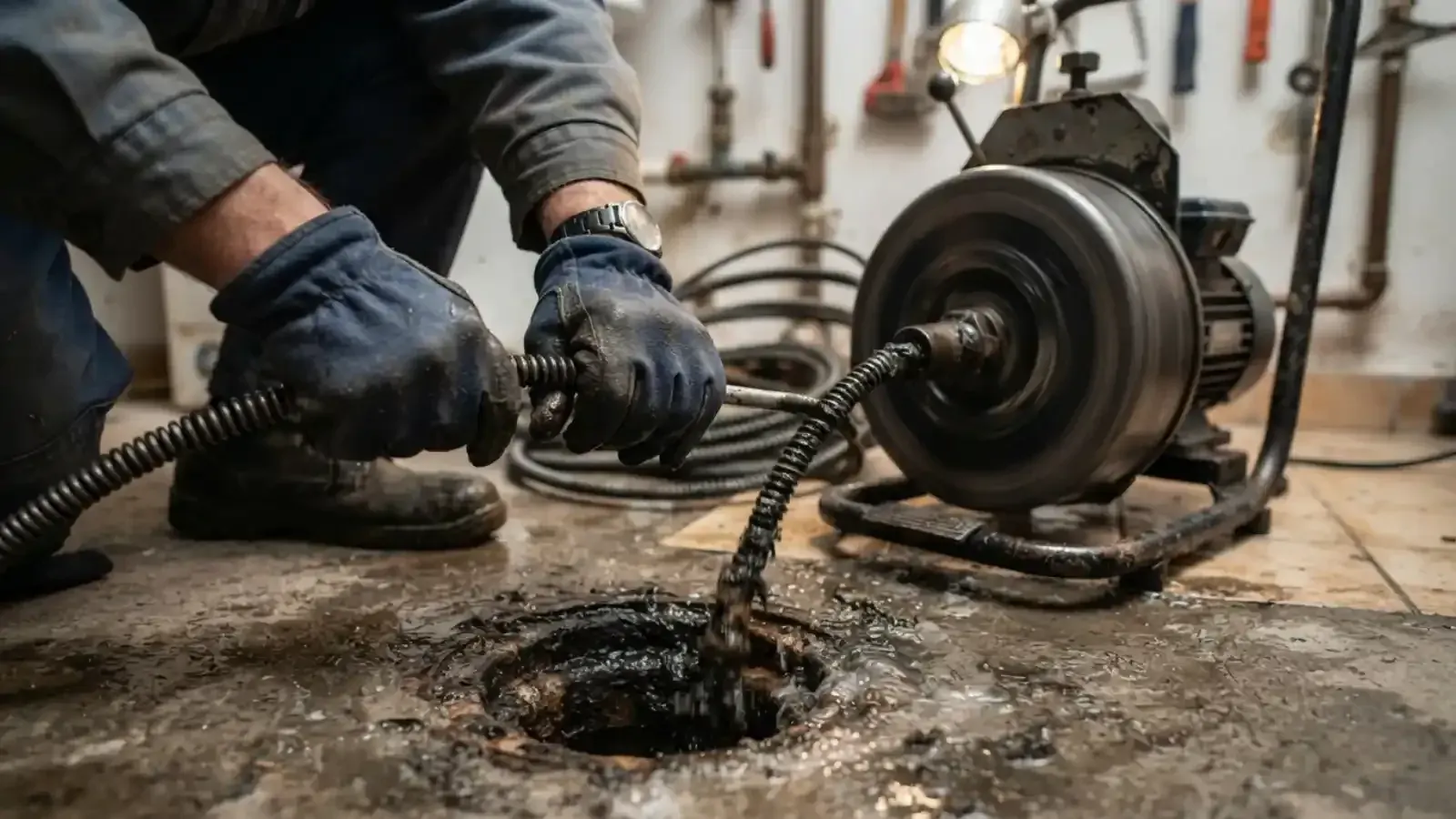
A drain cleaning visit uses a motorized cable machine that cuts or pulls out the blockage instead of dissolving it. The machine reaches past the trap, through the branch line, and into the main. A camera can then show the pipe walls, which tells you whether the clog was a one-time event or a damaged section.
For grease, scale, and tree roots, hydro jetting uses high-pressure water to scour the inside of the pipe wall. It leaves the line cleaner than a cable alone can. It also fits repeat clogs, where a cable opens a hole in the blockage and the buildup grows back.
A drain that slows again within weeks is a sign the line needs more than a quick fix. Same-day appointments are offered when available, and the 24/7 emergency line handles overflows and backups.
Renters, shared drains, and who should handle chemicals
If you rent, do not pour strong products into a drain you share with other units. A chemical that reaches a shared stack can affect a neighbor, and your lease may limit repairs you make yourself. Send the clog to your landlord in writing and keep dated photos.
The same advice applies for homes in South Fulton and College Park, where apartment buildings often share drain lines. A plumber can tell you which drain you share before anyone pours anything.
What this means in Union City, GA
Union City owns and maintains 91 miles of sewer and 112 miles of water line, according to its Water and Sewer page. A strong chemical poured into your drain leaves your home and joins that shared system. If you suspect a blockage in the street line, call the city water department at (770) 306-6855 instead of adding products at your fixtures.
Census figures show about 60 percent of households rent, with an owner-occupied rate of 40.4 percent. In a rental, one tenant's chemical can end up in a line that serves a neighbor, and a landlord should decide what is poured into it. Ask for the repair in writing before you use anything.
Questions homeowners ask
Safety sources say no. NIOSH lists sulfuric acid as corrosive, with skin and eye burns, and says it reacts violently with water. MedlinePlus names it as an ingredient in some drain cleaners that cause serious burns.
NIOSH says sulfuric acid is corrosive to metals, so metal traps, strainers, and older pipe can be attacked. A reaction that gives off heat in a closed trap is also hard to control. A plumber can inspect the pipe after any chemical use.
Start with a cup plunger, a hand-cleaned P-trap, and a hand-crank snake. Hot tap water with dish soap helps with grease. If the drain slows again, a plumber can use a cable machine or hydro jetting.
MedlinePlus says to flush with plenty of water for at least 15 minutes and get medical help. Call Poison Control at 1-800-222-1222 for guidance or 911 in an emergency. Keep the product label to read to them.
No. The CDC says never to mix bleach with ammonia or any other cleaner, and Poison Control warns that mixed products can make poisonous fumes. Use one method at a time and ventilate the room.
Report it to your landlord in writing first, because about 60 percent of Union City households rent and your lease may control repairs. Skip strong chemicals in shared lines. If water is backing up or overflowing, call (770) 214-4545 for the 24/7 emergency line.